Best Laptops for Teachers in 2026 (7 Real Picks)
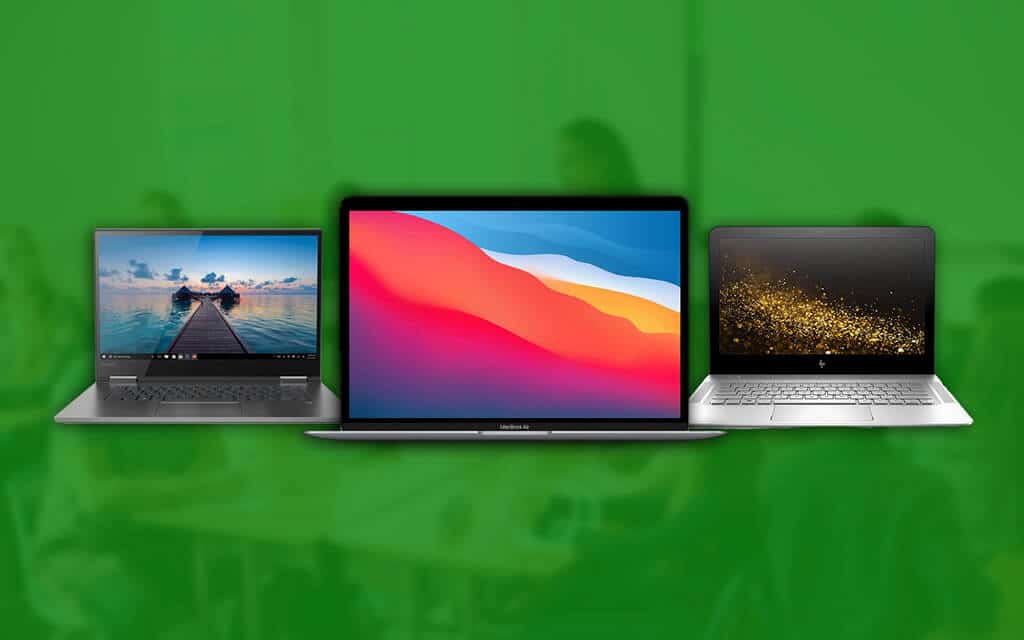
Disclosure: This post contains affiliate links. We earn a commission on purchases made through these links, at no extra cost to you.
Teachers don't need a "gaming laptop dressed up for the classroom" — they need something light enough to carry between rooms, a battery that survives a full school day without a charger nearby, a webcam and mic that hold up for parent conferences or hybrid lessons, and a port (or a reliable dongle) that still talks to the aging HDMI projector bolted to the wall. Most teachers are also buying this themselves, so budget and honest education discounts matter as much as specs.
This list skips the generic "here's a gaming laptop" pick from older buying guides and focuses on what actually gets used in a classroom, plus a few notes on district ecosystems (Google Classroom vs. Microsoft vs. iPad-heavy schools) since that usually decides more than any spec sheet.
Quick comparison table
| Pick | Best for | Weight | Battery (rated) | Starting price |
|---|---|---|---|---|
| Apple MacBook Air (M5, 13") | Overall pick, iPad-ecosystem schools | ~1.23 kg | Up to 18 hrs | ~$1,299 (refurb M2/M3 from ~$700–850) |
| ASUS Zenbook 14 OLED | Windows all-rounder | ~1.2 kg | ~10-13 hrs | ~$999–1,199 |
| Lenovo Yoga 7i 2-in-1 | Grading/annotating with a pen | ~1.4 kg | ~10-12 hrs | ~$900–1,100 |
| Lenovo IdeaPad Flex 5i Chromebook Plus | Google Classroom districts | ~1.5 kg | ~10 hrs | ~$349–499 |
| Acer Aspire Go 15 / similar | Budget Windows under $600 | ~1.7 kg | ~8-10 hrs | ~$450–550 |
| Surface Laptop 8 (Snapdragon X2) | Durable, long-battery Windows | ~1.3 kg | 12-20+ hrs (real-world) | ~$999 |
| Refurbished ThinkPad T14 | Best value / off-lease durability | ~1.5 kg | ~8-10 hrs (varies by battery health) | ~$250–450 |
Prices shift constantly and vary by configuration, so treat these as ballparks, not quotes — always check the current listing before buying.
How we picked
We prioritized weight (something you can carry between classrooms without a shoulder ache), all-day battery life since most schools don't leave outlets free, a webcam and mic that won't embarrass you on a parent Zoom call, HDMI or a workable USB-C-to-HDMI path for classroom projectors, and a genuine budget option, since many teachers are buying with their own money rather than a district PO. We did not run our own lab benchmarks here — specs and figures below are manufacturer-published or drawn from current retail listings, linked inline, and prices are hedged because they move often.
1. Apple MacBook Air (M5, 13-inch) — best overall
- Display: 13.6" Liquid Retina
- Chip: Apple M5 (10-core CPU)
- RAM: 16GB unified memory (recommended floor)
- Storage: 512GB SSD
- Weight: ~1.23 kg (2.7 lb)
- Battery: rated up to 18 hours
Apple's M5 MacBook Air launched in March 2026 and is the base 13-inch configuration Apple now lists starting at $1,299 after a mid-2026 price increase tied to memory-chip costs. It's fanless, silent in a classroom, and the battery genuinely lasts a full teaching day on light-to-moderate use (lesson planning, grading in a browser, video calls).
If $1,299 is out of reach, a refurbished or Apple-certified-renewed M2 or M3 Air is the realistic budget path into macOS — those routinely sell in the $700–$900 range depending on condition and configuration.
On the education discount: Apple's US education store offers K-12 teachers and staff pricing, typically $100–$200 off MacBook models, and as of May 2026 Apple tightened verification to require a third-party ID check (UNiDAYS) rather than just a school email — budget a few extra minutes to verify. There's also a rotating Back to School promotion (gift card with purchase) that runs separately from the standing education discount; check what's live before you buy, since terms change yearly.
Pros: near-silent, best-in-class battery life, tight integration if your school is iPad-heavy, strong resale value.
Who it's for: teachers in iPad/Apple-ecosystem schools, or anyone who wants the least fussy laptop and can absorb the price (even with the discount).
2. ASUS Zenbook 14 OLED — best Windows all-rounder
- Display: 14" 2880×1800 OLED, 120Hz
- CPU: Intel Core Ultra 7 (or AMD Ryzen AI variant, depending on configuration)
- RAM: 16GB (soldered — buy the RAM you need up front)
- Weight: ~1.2 kg
- Battery: roughly 10-13 hours depending on workload
The Zenbook 14 OLED is the Windows equivalent of "light enough to not think about it." The OLED panel makes handwritten annotations and colorful slide decks look noticeably better than a budget IPS screen, and ASUS's OLED Care settings (pixel shift, dimmer default brightness) address the burn-in worry that used to make OLED a bad classroom pick. It has Thunderbolt 4/USB-C, so a USB-C-to-HDMI adapter (keep one in your bag — most classroom projectors are still HDMI or VGA) covers you at the projector.
Since RAM is soldered on this model, configure for 16GB minimum at purchase — you can't upgrade it later.
Pros: excellent screen, genuinely light, good port selection for a thin laptop, competitive with MacBook Air on battery for the price.
Who it's for: Windows/Microsoft-ecosystem districts that want something closer to MacBook Air polish without switching to macOS.
3. Lenovo Yoga 7i 2-in-1 — best for grading and annotating with a pen
- Display: 14" touchscreen, 2-in-1 hinge
- CPU: Intel Core Ultra (varies by configuration)
- RAM: 16GB recommended
- Weight: ~1.4 kg
- Pen: ships with or supports the Lenovo Yoga Pen (MPP/AES compatible), 4,096 pressure levels
If you grade PDFs, annotate worksheets, or sketch diagrams on-screen, a pen-enabled 2-in-1 earns its keep in a way it doesn't for most office workers. The Yoga 7i 2-in-1 folds flat into tablet mode for marking up documents and its stylus support is genuinely good — worth verifying the exact pen included/compatible with whatever generation is currently listed, since Lenovo revises this yearly.
An HP Envy x360 is a reasonable alternative in this category, but note it uses HP's own MPP 2.0 pen and — confusingly — HP's official pen is not compatible with every Envy x360 chassis revision, so check the specific model number before assuming pen compatibility.
Pros: flexible form factor for annotating, solid pen input, still light enough to carry.
Who it's for: teachers who mark up documents or sketch on-screen regularly — English, math, and art teachers especially.
4. Lenovo IdeaPad Flex 5i Chromebook Plus — best for Google Classroom districts
- Display: 14" 1920×1200 IPS touchscreen, 2-in-1 hinge
- CPU: Intel Core i3 (13th gen)
- RAM: 8GB
- Storage: 128GB
- Weight: ~1.5 kg
- Battery: rated around 10 hours
If your district runs Google Classroom and most of your work happens in a browser (Docs, Slides, Gmail, Meet), a Chromebook genuinely is enough — this isn't a compromise pick, it's the right tool. The Flex 5i Chromebook Plus carries Google's "Chromebook Plus" certification (guaranteed minimum specs, on-device AI features), has a touchscreen and 360° hinge, and lists around $499 MSRP with street prices frequently lower.
8GB RAM is fine here specifically because ChromeOS is far lighter than Windows or macOS — this is the one laptop on this list where we'd say 8GB is acceptable rather than recommending the 16GB floor.
Pros: cheap, fast enough for browser-based teaching workflows, touchscreen and flip mode useful for presenting.
Who it's for: Google Workspace for Education districts where your daily tools are already all in Chrome.
5. Budget Windows pick under $600
- Display: 15.6" Full HD IPS (typical)
- CPU: AMD Ryzen 5/7 or Intel Core i5-class
- RAM: 16GB (look for this explicitly — many sub-$500 laptops still ship 8GB)
- Weight: ~1.6-1.8 kg
Laptops like the Acer Aspire Go 15 or similar budget 15.6" models now commonly pack 16GB of RAM and a 512GB SSD under $600, which used to require spending closer to $800. If Windows/Office is your district's ecosystem and Apple/Chromebook aren't options, look specifically for a listing with 16GB RAM and a 1080p IPS panel — avoid the sub-$400 tier, where 8GB RAM and TN panels are still common and will feel sluggish within a year. Our related guide has more detail: see our best laptops under $600 and best laptops under $400 roundups if budget is the primary constraint.
Pros: genuinely capable spec sheet for the price now, 16GB RAM is achievable under $600.
Who it's for: teachers on a strict personal budget who need Windows/Office compatibility.
6. Microsoft Surface Laptop 8 — durable, long-battery Windows option
- Display: 13.8" or 15" PixelSense touchscreen
- CPU: Qualcomm Snapdragon X2 Plus/Elite (ARM)
- RAM: up to 32GB LPDDR5X
- Weight: ~1.3 kg (13.8")
- Battery: Microsoft's own figures and independent reviews put real-world battery in the 12-20+ hour range depending on use
Microsoft's Surface Laptop 8 launched for consumers in June 2026 with Snapdragon X2 chips and a claimed NPU rating up to 80 TOPS. It's an ARM-based Windows machine, which means most everyday apps (Office, Chrome, Teams) run natively or well-emulated, but check compatibility if you rely on a niche Windows-only gradebook or projector-management app before committing — ARM Windows has closed most gaps but isn't 100%.
Microsoft's education store advertises up to roughly 10% off select Surface devices for verified students and staff — hedge that figure and confirm it against whatever's live when you buy, since Microsoft's education promotions rotate.
Pros: excellent battery life, premium build, touchscreen, Windows/Office-native for Microsoft districts.
Who it's for: teachers who want Surface build quality and battery life and don't run niche legacy Windows software.
7. Refurbished ThinkPad T14 — best value / off-lease pick
- Display: 14" Full HD
- CPU: varies by generation (10th/11th gen Intel or Ryzen options common on the refurb market)
- RAM: look for 16GB listings specifically
- Weight: ~1.5 kg
- Ports: full-size HDMI on most generations — a real advantage for projector hookups
Off-lease business ThinkPads are a category we consistently point budget buyers toward, and the T14 is a strong example: businesses replace fleets every 3-4 years, and the resulting refurbished units (sold through retailers offering warranties, typically 1 year) land at a fraction of new pricing while retaining ThinkPad-grade keyboards and MIL-SPEC-tested chassis durability. Battery life and condition vary by seller and unit age, so buy from a refurbisher that discloses battery health and offers a real return window, and confirm RAM/storage configuration before purchase since off-lease listings vary widely unit to unit.
Pros: best keyboard in this list, durable chassis, full-size HDMI, lowest price-per-spec.
Who it's for: budget-conscious teachers comfortable buying refurbished, or anyone who wants a real physical HDMI port without a dongle.
Buying guide: what actually matters for teachers
Weight and portability. If you move between classrooms, a lab, and a shared office, aim for 1.2-1.5 kg. Anything heavier gets left in one room, which defeats the purpose of a laptop.
Battery life. A school day rarely has a spare outlet nearby during passing periods. Look for laptops rated 10+ hours, since real-world use typically runs shorter than the marketing number.
Webcam and microphone. Hybrid and remote-parent-conference expectations haven't gone away. A 1080p webcam and a decent noise-cancelling mic setup (built-in or a cheap USB add-on) matter more than most spec sheets suggest.
Ports for projectors. Many classrooms still run HDMI or even VGA projectors. If your laptop is USB-C only, keep a USB-C-to-HDMI (or -VGA) adapter in your bag permanently — losing five minutes of class hunting for a dongle is a real, recurring cost.
RAM: 16GB is the floor for Windows and macOS machines if you want the laptop to still feel fast in three years — browser tabs, grading platforms, and video calls add up fast. 8GB is acceptable only on ChromeOS, where the OS footprint is dramatically lighter.
Durability and quiet fans. You're carrying this daily and using it in a quiet room full of students — a laptop with loud fan spin-up under light load is genuinely disruptive during a lesson.
Laptop vs. desktop or all-in-one. If you split time between a classroom and a home office and never need to carry the machine, a desktop or all-in-one can get you more performance per dollar. But most teachers who searched for "best computer for teachers" are really asking about portability between rooms — for that use case, a laptop wins even at a spec disadvantage.
Higher ed / professors. If you're teaching at the college level, the calculus shifts: heavier research or statistical software (SPSS, MATLAB, R, discipline-specific tools), the likelihood of docking to an external monitor in an office, and possibly running VMs or larger datasets. In that case, prioritize a laptop with reliable Thunderbolt/USB-C docking support and consider stepping up to 32GB RAM if your software demands it — the picks above (Zenbook 14, Surface Laptop 8, MacBook Air) all dock cleanly to external monitors via USB-C.
District ecosystem is the real decision driver. Before specs, figure out what your school standardizes on:
- Google Classroom / Google Workspace for Education → a Chromebook Plus (like pick #4) is genuinely sufficient, not a downgrade.
- Microsoft 365 / Office-heavy districts → a Windows machine (Zenbook, Surface, budget pick, or refurbished ThinkPad) keeps you compatible with district-managed software and group policies.
- iPad-heavy schools → a MacBook Air pairs well via Handoff/AirDrop/Continuity with school-issued iPads.
Frequently asked questions
Do teachers get laptop discounts? Often, yes. Apple, Dell, HP, and Lenovo all run dedicated education stores with teacher/staff pricing — typically in the rough range of 5-25% off depending on the brand and product, though exact percentages and eligible models change often and some brands (HP, Lenovo) advertise higher headline discounts on select items. Verification usually requires proof of employment at a school (via SheerID, ID.me, or similar), not just a personal claim, and some programs cap how many items you can buy per year. Check the current terms on the manufacturer's own education store before assuming a specific percentage.
Is a Chromebook enough for a teacher? It depends entirely on your district. If your school runs Google Classroom and your daily work lives in a browser — Docs, Sheets, Slides, Gmail, Meet — a Chromebook Plus like the Lenovo Flex 5i is genuinely enough, not a compromise. If you need desktop Office apps, specialized gradebook software that isn't web-based, or Adobe-style creative tools, you'll want Windows or macOS instead.
MacBook or Windows for teachers? Neither is objectively better — it comes down to your district's ecosystem and your budget. MacBook Air makes the most sense if your school is iPad-heavy or you value battery life and build quality and can afford it, even with the education discount. Windows makes more sense if your district manages devices via Microsoft 365/Intune, if you use Windows-only classroom or gradebook software, or if budget is tight, since Windows laptops span a much wider price range down to genuinely usable sub-$600 options.
What specs does a teacher actually need? 16GB RAM (8GB is fine only on ChromeOS), a 256GB+ SSD, a battery rated for at least 10 hours, a 1080p-or-better webcam, and either a full HDMI port or a USB-C-to-HDMI adapter you keep in your bag. Beyond that, prioritize weight and battery life over raw processing power — most classroom work (docs, browser tabs, video calls, light photo/video for lesson content) doesn't need a high-end CPU or discrete GPU.
The final verdict
For most teachers, the Apple MacBook Air M5 is the safest overall pick if the price fits your budget and your school leans Apple/iPad — it's light, quiet, and the battery genuinely lasts a full day. If you're in a Microsoft district or want more configuration flexibility, the ASUS Zenbook 14 OLED is the strongest Windows equivalent. And if your school runs Google Classroom, don't overspend — a Chromebook Plus is a legitimately complete solution, not a fallback.
If budget is the binding constraint, look at our best laptops under $600 and best laptops under $400 guides for more options in that range, or consider a refurbished ThinkPad T14 for the best spec-per-dollar with a proper HDMI port built in. And if you're prepping video content or showing films in class, our best laptops for watching movies guide covers screen and speaker quality in more depth.

Tech enthusiast and founder of Technize. Passionate about making technology accessible and helping people make smarter buying decisions.