Best Laptops Under $1000 in 2026: 7 Picks
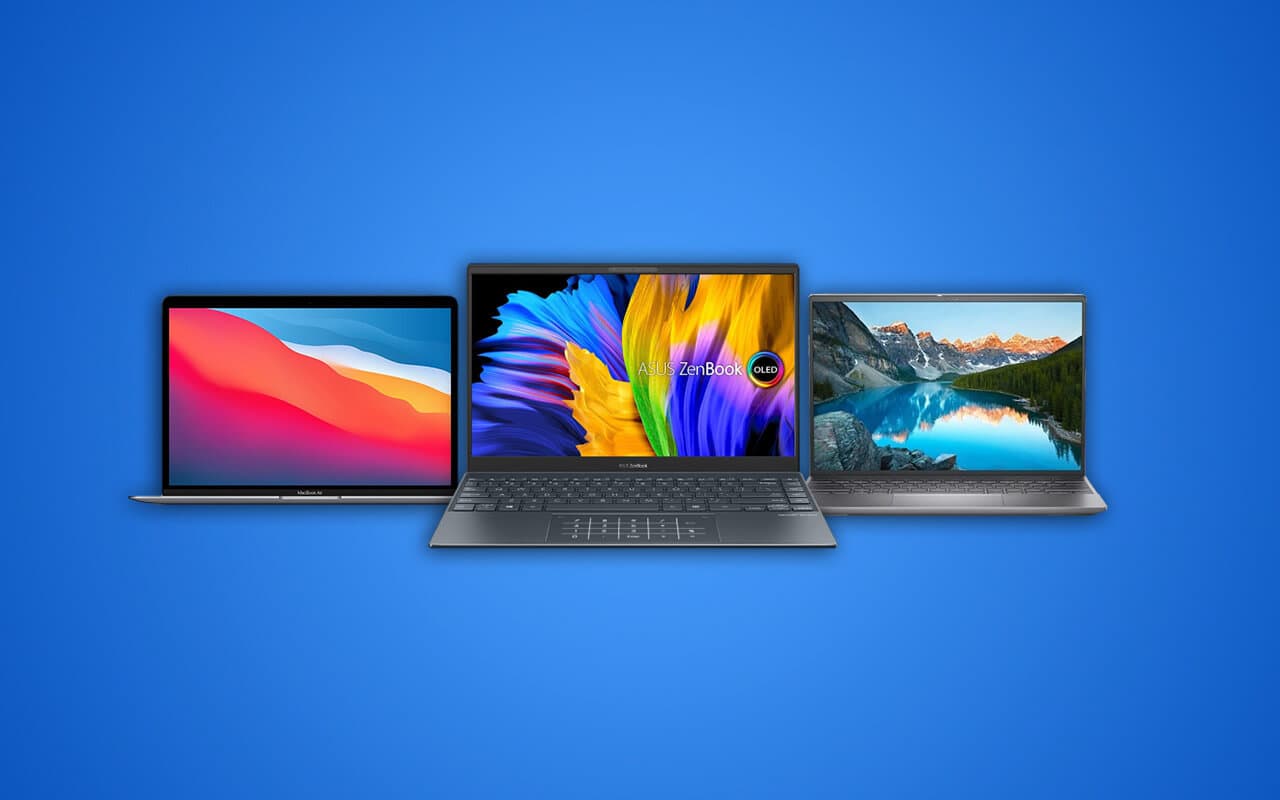
Disclosure: This post contains affiliate links. We earn a commission on purchases made through these links, at no extra cost to you.
If you searched for a "2021 best laptops under $1000" list, you found an old page — this one has been rewritten from scratch for 2026. A lot has changed since 2021, and not all of it good: DRAM and NAND prices have roughly doubled over the past year on AI data-center demand, and laptop makers have passed a meaningful chunk of that along. Memory now accounts for a much bigger slice of a laptop's bill of materials than it did even two years ago, which is why some $1,000 configs in 2026 quietly ship less RAM than a $700 laptop did in 2023.
That makes $1,000 an interesting tier right now. It's genuinely the sweet spot — enough headroom for a 16GB RAM floor, a 512GB SSD, and either an OLED panel or a 120Hz+ screen — but it's also where cost-cutting is easiest to hide. Below, eight picks across the ways people actually use a laptop, plus the honest answer on where a $1,000 budget can't quite reach (true 4K, and a brand-new MacBook Air).
Quick comparison table
| Pick | Best for | CPU / GPU | RAM / Storage | Typical price |
|---|---|---|---|---|
| ASUS Zenbook 14 OLED | All-round ultrabook | Ryzen AI 7 445 / integrated | 16GB / 1TB | Recurring ~$799–999 |
| Lenovo IdeaPad Slim 5 (16") | Budget everyday laptop | Ryzen AI 5/7 / integrated | 16GB / 512GB | ~$650–800 on sale |
| Acer Nitro V 16 (RTX 5050) | Gaming all-rounder | Ryzen 5/7 / RTX 5050 8GB | 16GB / 512GB | Recurring ~$699–899 |
| Lenovo LOQ 15 (RTX 5050) | Gaming build quality | Core i5-13450HX / RTX 5050 8GB | 16GB / 512GB | Recurring ~$780–880 |
| Refurb MacBook Air (M2/M3) | Apple under $1,000 | Apple M2 or M3 | 8–16GB / 256–512GB | ~$558–800 refurbished |
| Lenovo Yoga 7i 14 (2-in-1) | Convertible / touchscreen | Core Ultra 5 226V / integrated | 16GB / 512GB | Recurring ~$700–935 |
| Surface Laptop 7 (Snapdragon) | Copilot+ / all-day battery | Snapdragon X Plus/Elite | 16GB / 256–512GB | Recurring ~$699–949 |
| Lenovo Chromebook Plus 14 (OLED) | Lightweight ChromeOS option | Intel Core 3 / integrated | 8–16GB / 128–256GB | ~$649–749 |
Prices above are recurring sale ranges pulled from recent retailer listings, not list prices — treat every number here as "typically," not guaranteed. Sale cadence moves fast enough that a specific config can be $100 higher or lower depending on the week you check the Amazon link.
How we picked
Every laptop below was checked against current manufacturer spec pages and multiple live retail listings rather than pulled from an old spec sheet. Because this is a price-capped roundup rather than a lab test, we're not claiming to have benchmarked these machines ourselves — the performance context (frame rates, battery estimates) comes from published reviews and manufacturer data, which we link inline. We prioritized configs with 16GB of RAM and at least a 512GB SSD, since 8GB is no longer defensible at this price in 2026, and we flagged the specific SKUs known to ship the memory-crunch downgrade (8GB or 12GB RAM at what looks like the same price).
1. ASUS Zenbook 14 OLED — best all-round ultrabook
Specs: 14" 2.8K OLED, AMD Ryzen AI 7 445, integrated Radeon graphics, 16GB RAM, 1TB SSD, Wi-Fi 6E
Pros:
- 2.8K OLED panel with 100% DCI-P3 coverage — genuinely rare at this price
- 16GB/1TB is a generous baseline configuration, not an upsell
- Thunderbolt 4 and a sub-3-lb chassis
The Zenbook 14 OLED line lists around $999–1,149 depending on configuration, but it has repeatedly dropped to about $799 at Walmart for the 16GB/1TB Ryzen AI 7 SKU, which is the config worth waiting for (Notebookcheck, ASUS). Who it's for: anyone whose laptop is mostly a screen for work, browsing, and streaming, and who wants that screen to look genuinely good.
2. Lenovo IdeaPad Slim 5 (16") — best budget everyday laptop
Specs: 16" WUXGA IPS, AMD Ryzen AI 5/7, integrated graphics, 16GB RAM, 512GB SSD, Wi-Fi 6/7 depending on config
Pros:
- Larger 16" screen with a 16:10 aspect ratio for more usable vertical space
- 16GB RAM configs are common, not the exception, in current listings
- Consistently the cheapest way to a real 16GB/512GB machine in this class
Lenovo's IdeaPad Slim 5 line spans multiple chip generations at once right now, so double-check the listing before buying — some older-stock units still ship 8GB RAM or slower storage (Lenovo). Who it's for: buyers who want the biggest screen and most RAM per dollar and don't need OLED or a discrete GPU.
3. Acer Nitro V 16 (RTX 5050) — best gaming laptop under $1,000
Specs: 16" WUXGA IPS 180Hz, Ryzen 5/7 or Core options, NVIDIA GeForce RTX 5050 8GB GDDR7, 16GB RAM, 512GB SSD
Pros:
- Current-generation RTX 5050 with DLSS 4 frame generation
- 180Hz 1200p panel is a real step up from the usual 1080p/144Hz base
- Recurring sale price leaves comfortable room under $1,000
We've tracked this same machine at ~$699 during recurring promotions in our gaming laptops under $800 coverage — at $1,000 you have headroom to go up a configuration (more RAM or storage) rather than needing to hunt for the absolute floor price. In published RTX 5050 benchmarks it runs esports titles well past 100fps at 1080p and modern AAA games in the 55–60fps range at high settings before DLSS (NVIDIA). Who it's for: buyers who want a genuine current-gen GPU and don't need to go all the way up to RTX 5060.
4. Lenovo LOQ 15 (RTX 5050) — best build quality for gaming
Specs: 15.6" FHD 144Hz, Core i5-13450HX, NVIDIA GeForce RTX 5050 8GB GDDR7, 16GB RAM, 512GB SSD
Pros:
- HX-class CPU gives more sustained multi-core headroom than the Nitro V's chip
- Typically better thermals and a more rigid chassis than budget Acer/HP rivals
- Same RTX 5050 GPU class as the Nitro V, at a similar sale price
The LOQ 15 has sold in the ~$780–880 range on sale at Lenovo.com and Amazon; its resting (non-sale) price sits closer to $1,000, so this is one to catch on a promotion. Watch for a 12GB-RAM "RAM-crisis special" variant that looks nearly identical on the surface — insist on the 16GB config. Who it's for: buyers who prioritize chassis quality and CPU headroom over screen refresh rate.
5. Refurbished MacBook Air (M2 or M3) — the honest Apple pick
Specs: 13.6" Liquid Retina, Apple M2 or M3, 8–16GB unified memory, 256–512GB SSD
Pros:
- Apple's efficiency and build quality at a fraction of new-Air pricing
- M3 in particular remains genuinely fast for everyday use in 2026
- Certified-refurbished channels carry a warranty, unlike used marketplace listings
Here's the plain answer: a new MacBook Air does not fit a $1,000 budget anymore. The M5 Air launched at $1,099 for the 13-inch model, but a mid-2026 price increase tied to memory-chip costs pushed the base 13-inch to $1,299 (Macworld, Apple Newsroom) — sale pricing has occasionally dipped toward $949 (AppleInsider), but that was before the increase, and current deals rarely get near $1,000. If you want Apple silicon under $1,000, the realistic route is a certified-refurbished M2 or M3 Air, which typically runs $558–800 depending on RAM and condition (RefurbMe). Prioritize 16GB over 8GB if you can find it, since 8GB unified memory ages worse on a machine you're likely to keep for years. Who it's for: buyers who want macOS specifically and are fine buying one generation (or two) behind current.
6. Lenovo Yoga 7i 14 (2-in-1) — best convertible under $1,000
Specs: 14" 2K OLED touchscreen, Intel Core Ultra 5 226V, integrated Arc graphics, 16GB RAM, 512GB SSD
Pros:
- OLED touchscreen on a 2-in-1, which is unusual below $1,000
- Full 360-degree hinge with pen support for note-taking or light sketching
- Copilot+ PC certification with a 40 TOPS NPU
List pricing sits around $935–1,050, but this exact config — Ultra 5 226V, 16GB, 512GB, OLED — has recurred at roughly $700 at Best Buy during named sale events (9to5Toys). HP's Envy x360 line (recently rebranded to OmniBook X) is a reasonable alternative if the Yoga isn't on sale when you're shopping (HP). Who it's for: buyers who want tablet mode or pen input alongside a full-size keyboard.
7. Surface Laptop 7 (Snapdragon) — best Copilot+ / ARM option
Specs: 13.8" or 15" PixelSense touchscreen, Snapdragon X Plus or X Elite, 16GB RAM, 256–512GB SSD
Pros:
- Best-in-class battery life for a Windows laptop, thanks to the ARM chip
- Copilot+ features (Recall, Live Captions, on-device AI) run natively
- Premium build quality that undercuts most Windows OEMs at this spec
With Qualcomm's next-generation Snapdragon X2 chips now shipping in newer machines, Surface Laptop 7 units have been hitting clearance-level pricing — as low as $699–849 for Snapdragon X Elite configs, and around $799–1,029 for X Plus, depending on RAM and storage (Windows Central, 9to5Toys). App compatibility on Windows-on-ARM has improved substantially since launch, but it's still worth checking that any laptop-specific software you rely on (not browsers, Office, or most everyday apps) runs natively before buying. Who it's for: buyers who want the longest possible battery life and don't run x86-only professional software.
A brief mention: premium Chromebook Plus
If you're open to ChromeOS, the Lenovo Chromebook Plus 14 with its OLED touchscreen (100% DCI-P3, 1920×1200) typically runs $649–749 — genuinely nice hardware for a browser-and-Android-apps workflow (PCWorld). It's not a full pick here because it's a different category of machine (no native Windows/macOS software), but it's worth a look if your laptop use is mostly web-based.
Buying guide: what $1,000 should get you in 2026
RAM: 16GB is the floor, not an upgrade. With DRAM prices up sharply on AI-driven demand, 8GB configs have crept back into $1,000 listings that would have shipped 16GB two years ago. Treat any $1,000 laptop with 8GB RAM as a pass — it's a config built to hit a price point, not to serve you well for the next 3–4 years.
Storage: 512GB SSD, not 256GB. The same memory-price pressure has pushed some makers toward smaller SSDs to protect margins. 512GB is comfortable; 256GB fills up fast once you factor in Windows updates, a couple of games, and photo/video files.
Display: OLED or 120Hz+, pick one. At $1,000 you can usually get a genuinely nice screen — either an OLED panel with real color accuracy (the Zenbook and Yoga 7i above) or a high-refresh IPS panel for gaming (the Nitro V and LOQ). You generally can't get both at this price; decide which matters more for how you'll actually use the laptop.
Where to cut: the GPU, if you're not gaming. A discrete GPU is the single biggest line item in a $1,000 build. If you're not gaming or doing GPU-accelerated creative work, skip it entirely and put that budget toward RAM, storage, or screen quality instead — see our best laptops for video editing under $1,000 guide if editing specifically is the use case.
Refurb vs. new. Certified-refurbished channels (manufacturer refurb programs, Amazon Renewed, Best Buy Outlet) are a legitimate way to jump up a tier — a refurbished last-gen premium laptop can outperform a new budget one at the same price. The tradeoff is a shorter or third-party warranty and less choice in exact configuration, so stick to certified-refurbished sellers rather than generic used listings.
Wi-Fi 6E or 7. Most current $1,000-tier laptops now ship Wi-Fi 6E at minimum, with some newer chips (Zenbook, some Snapdragon configs) offering Wi-Fi 7. Neither is essential unless your router already supports it, but it's a reasonable tiebreaker between two otherwise-similar machines.
Frequently asked questions
Is $1,000 a good budget for a laptop in 2026? Yes — it's arguably the best value tier available right now. It's the point where you can get 16GB RAM, a 512GB SSD, and either a genuinely good display or a current-generation gaming GPU, without the compromises that show up in $600–800 laptops during the current memory-price crunch.
Can I get a 4K laptop under $1,000? Practically no, and treat any listing claiming otherwise skeptically. True 4K (3840×2160) panels are essentially extinct at this price point in 2026 — GPU and battery-life tradeoffs, plus the same memory-cost pressure affecting the rest of the spec sheet, have pushed makers toward 2.8K/3K OLED panels instead (like the Zenbook 14 and Yoga 7i above). Those panels look excellent in practice; a 4K laptop screen mostly matters for photo/video work, where you'd be better served by dedicated color accuracy than raw pixel count anyway.
Can I get a MacBook under $1,000? Not new. The current MacBook Air (M5) starts at $1,299 after a mid-2026 price increase. The realistic path to macOS under $1,000 is a certified-refurbished M2 or M3 Air, typically $558–800 depending on configuration.
Is 8GB of RAM enough for a $1,000 laptop in 2026? No — at this price, 8GB is a laptop built to a price point rather than to last. With memory now a much larger share of a laptop's build cost, some $1,000 listings quietly ship 8GB where they'd have shipped 16GB a couple of years ago. Insist on 16GB.
Should I buy a gaming laptop or an ultrabook at $1,000? It depends entirely on whether you game. An RTX 5050 gaming laptop (Nitro V 16, LOQ 15) will have a worse screen, worse battery life, and worse build materials than an ultrabook at the same price — that's the tradeoff for the GPU. If gaming isn't a priority, an OLED ultrabook like the Zenbook 14 will feel like a nicer laptop day to day.
The final verdict
For most people, the ASUS Zenbook 14 OLED at its recurring ~$799–999 price is the pick — a 16GB/1TB config with a genuinely good OLED screen covers the vast majority of what people actually do with a laptop. If gaming is the priority, the Acer Nitro V 16 delivers a current-generation RTX 5050 with real headroom under $1,000. And if you specifically want macOS, be honest with yourself about the math: a new MacBook Air no longer fits this budget, so a refurbished M2 or M3 Air is the realistic route in.
For more specific use cases, see our guides to the best laptops under $600 and under $400 if $1,000 is more than you need, or the best 17-inch laptops under $1,000 if screen size matters more than portability.

Tech enthusiast and founder of Technize. Passionate about making technology accessible and helping people make smarter buying decisions.