Does My Laptop Have a Camera? How to Check
Disclosure: This post contains affiliate links. We earn a commission on purchases made through these links, at no extra cost to you.
Yes — if your laptop was made any time in the last decade or so, it almost certainly has a built-in camera. It's the small, easy-to-miss lens embedded in the bezel directly above your screen. The fastest way to confirm it and see it working is to open your laptop's built-in camera app: Camera on Windows 11, Photo Booth or FaceTime on a Mac, or the Camera app on a Chromebook.
If you open that app and see a live picture of yourself, you have a working camera — done. If you get a black screen, an error, or no camera app opens at all, the sections below walk through why and what to do about it.
How to check if your laptop has a camera (Windows 11)
Option 1: Open the Camera app
- Click Start and type "camera."
- Open the Camera app from the search results.
- If you see a live video preview, your laptop has a working camera. The first time you open it, Windows may ask you to grant the app camera access — click Yes.
Option 2: Check the Cameras settings page
Windows 11 has a dedicated settings page for managing webcams:
- Go to Settings > Bluetooth & devices > Cameras.
- Any built-in or connected camera should be listed under Connected cameras. Selecting it shows a live preview along with brightness, contrast, and background-effects controls.
- If nothing appears here, the camera either isn't installed, is disabled, or has a driver problem (see the fixes below).
Option 3: Check Device Manager
- Right-click Start and choose Device Manager.
- Expand Cameras (or Imaging devices on older builds).
- If you see an entry like "Integrated Camera" or a manufacturer name, the hardware exists. A down-arrow icon or a yellow warning triangle means it's disabled or having a driver issue.
How to check on a Mac
Macs don't have a settings toggle to "detect" a camera — since every modern Mac laptop has one built in, the standard is to just open an app that uses it:
- Open Photo Booth or FaceTime from Spotlight or the Applications folder.
- If you see a live preview, the camera is present and working.
- You can also confirm the camera model without opening an app: click the Apple menu > About This Mac > More Info > System Report, then look under Camera in the hardware list.
Apple builds the camera so it can't turn on without the tiny green indicator light next to it lighting up — that light is a hardware-level privacy signal, not just software.
How to check on a Chromebook
Open the Camera app from the app launcher (or search "camera" in the launcher). If it opens and shows a live picture, your Chromebook has a working built-in camera. Virtually all Chromebooks, including budget models, ship with one for video calls and Google Classroom-style use.
Where the camera is hiding
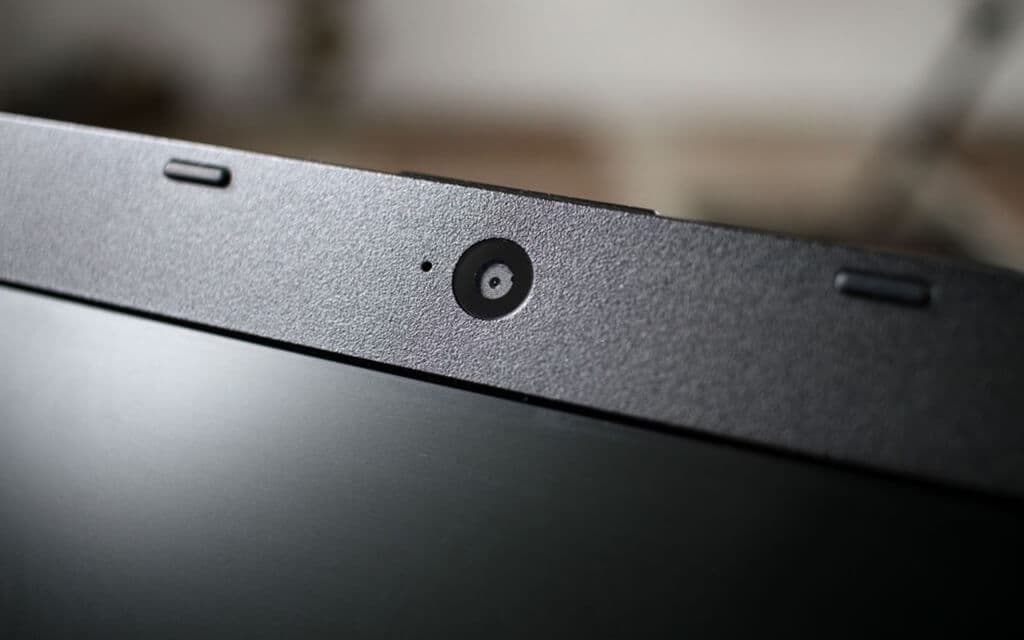
Most people who search "does my laptop have a camera" have simply never noticed the lens, because manufacturers keep it as small and unobtrusive as possible. Common locations:
- Top bezel, centered — the standard spot on the vast majority of Windows and Mac laptops. Look for a tiny dark circle, often next to a pinhole microphone.
- In the display notch — MacBook Pro and MacBook Air models from 2021 onward, plus a growing number of thin-bezel Windows laptops, tuck the camera into a small cutout at the top of the screen rather than in a bezel strip.
- Two dots instead of one — if you see a second small circle near the camera, that's usually an infrared (IR) camera for Windows Hello face sign-in, not a second webcam. It works alongside the regular color camera.
- Pop-up or keyboard-deck cameras — a small number of older business laptops (some Huawei MateBook models, for example) placed a pop-up camera in the keyboard deck to avoid a bezel notch. These are uncommon today.
True camera-less laptops are rare. The main exceptions are certain enterprise/business configurations sold with the camera deliberately omitted as a corporate security option, and a handful of ultra-budget or refurbished units where it was a cost-cutting choice. If your laptop app searches turn up nothing and Device Manager shows no camera entry at all, it's worth checking the exact model spec sheet — it may genuinely not have one, in which case an external USB webcam is the fix (see below).
Camera shows up but the screen is black
This is the most common "does my laptop have a camera" follow-up problem, and it's rarely a missing camera — it's usually one of these:
1. The physical privacy shutter is closed. Many laptops built in the last few years ship with a sliding shutter over the lens — Lenovo calls its version ThinkShutter, and several other brands include similar sliding covers or hardware kill switches. When the shutter is closed, the camera can look completely offline to Windows and apps, even though nothing is actually broken. Look for a small slider directly beside the camera lens and make sure it's pushed open.
2. A function-key toggle disabled it. Many laptops have an F-key (often with a camera icon) that turns the camera on and off, sometimes with a small LED indicator on the key itself. Check your F-keys, usually pressed together with the Fn key.
3. Camera permissions are turned off. On Windows 11, go to Settings > Privacy & security > Camera and make sure Camera access is on, and that the specific app you're using (Zoom, Teams, browser, etc.) is allowed under Let apps access your camera.
4. The camera is disabled in Device Manager. Open Device Manager > Cameras, right-click your camera, and choose Enable device if that option is available. If the driver looks outdated or corrupted, try Update driver first.
5. Another app is already using it. Only one app can access the camera at a time on most systems. Close other video apps, browser tabs, or background software before testing again.
If none of that works and Device Manager shows no camera at all, or the entry has a persistent error, that points to an actual hardware failure — typically something for a repair shop rather than a settings fix.
Is the camera currently recording?
If you're checking because you're worried the camera might be on without your knowledge, there's a built-in indicator to look for rather than a setting to dig through:
- Windows 11 shows a small camera icon in the notification area, and often a toast notification, whenever an app is actively using the camera.
- macOS lights a small green dot next to the camera whenever it's capturing — Apple has said this indicator is wired directly to the camera hardware, so software alone can't fake or suppress it.
For a deeper look at physically blocking the lens when you're not using it, see our guide on why people cover their laptop camera.
What resolution is a built-in laptop camera?
Built-in webcams are usually far less impressive than the rest of the laptop's specs:
- 720p is still common on budget and older laptops.
- 1080p has become the standard resolution on most mid-range and premium laptops sold in the last several years, especially since remote work and video calls pushed manufacturers to upgrade.
- Windows Hello IR cameras are a separate, lower-resolution infrared sensor used only for face sign-in — not for video calls.
- Copilot+ PCs (laptops with a capable NPU) support Windows Studio Effects, which processes the camera feed on-device for background blur, eye-contact correction, and auto-framing — configurable from Settings > Bluetooth & devices > Cameras > Advanced camera options. This is a processing layer on top of the existing camera, not a resolution upgrade.
If your built-in camera looks soft, grainy, or badly exposed even after checking lighting and drivers, that's a hardware limitation, not a setting — see our guide on improving laptop camera quality for what you can actually adjust.
No built-in camera, or yours is broken? Your options
Use your phone as a webcam. Both platforms now support this natively, no extra hardware required:
- Mac: Continuity Camera lets a nearby iPhone (running a recent iOS) automatically act as your Mac's webcam in FaceTime, Zoom, Teams, and most other video apps, wired or wirelessly, complete with Center Stage and Desk View.
- Windows 11: the Connected Camera feature (via Settings > Bluetooth & devices > Manage devices) links an Android phone as a wireless webcam that any app can select as a camera source, once the Phone Link app is set up.
Buy an external USB webcam. This is the simplest fix for a genuinely camera-less laptop or a dead built-in one, and a 1080p external webcam plugs in with no configuration beyond a USB port.
For setup tips once your camera — built-in or external — is up and running, see our guide on how to use a laptop camera.
Frequently asked questions
Do all laptops have cameras?
The large majority do, especially anything made in the last 10+ years. Exceptions are mostly business/enterprise configurations where the camera was deliberately left out as a security option, plus a small number of ultra-budget models. Check Device Manager (Windows) or System Report (Mac) to confirm your specific model.
Where is the camera on my laptop?
Almost always in the top bezel directly above the screen, centered or slightly off-center. On MacBook Pro/Air models from 2021 onward and some newer Windows laptops, it's tucked into a small notch cut into the top of the display instead of a full bezel strip.
How do I turn on the camera on my laptop?
Open the Camera app (Windows 11 or Chromebook) or Photo Booth/FaceTime (Mac) — that alone activates it. If it doesn't turn on, check for a physical privacy shutter next to the lens, a camera function key, and camera permissions in Settings.
Why is my laptop camera showing a black screen?
The most common cause on modern laptops is a closed physical privacy shutter (like Lenovo's ThinkShutter) sitting right over the lens. After that, check a disabled function-key toggle, blocked app permissions, a disabled entry in Device Manager, or another app already holding the camera open.
The final verdict
Nearly every laptop sold in the past decade has a camera built into the top bezel or display notch, and the quickest way to confirm yours does is simply opening the Camera app (Windows), Photo Booth (Mac), or Camera app (Chromebook) and watching for a live preview. If you get a black screen instead of "no camera," check the physical shutter first — it's the single most common cause of a laptop camera that looks dead but isn't. From there, work through Device Manager, camera permissions, and driver updates before assuming it's broken.
If your laptop truly has no built-in camera, or the hardware has failed, phone-as-webcam features on both Windows and Mac cover you with zero extra spending, and an external USB webcam is a cheap, reliable backup. For getting the most out of whichever camera you end up using, see our guides on using a laptop camera and improving laptop camera quality.

Tech enthusiast and founder of Technize. Passionate about making technology accessible and helping people make smarter buying decisions.