How Long Does a Laptop Battery Last? Average Battery Life in 2026
Disclosure: This post may contain affiliate links. If you purchase through these links, we may earn a small commission at no extra cost to you.
"How long does a laptop battery last?" is really two questions, and they have very different answers:
- Per charge: a typical 2026 ultrabook runs 10–16 hours of real mixed use; budget laptops manage 6–10 hours; gaming laptops get 2–6 hours of light work and often under 2 hours of actual gaming.
- Before it wears out: most laptop batteries are rated for 300–1,000 charge cycles, which works out to roughly 3–5 years of normal use before capacity drops enough to notice.
Both numbers have improved a lot since this article was first written — and most of the old battery-care advice you'll still find online (including our own from 2021) is now obsolete. Here's the current picture.
Average laptop battery life per charge in 2026
Independent web-browsing rundown tests (the fairest common benchmark, usually run at 150 nits of brightness) put today's laptops in these ranges:
| Laptop class | Typical real-world battery life |
|---|---|
| MacBook Air / Pro (Apple Silicon) | 15–20+ hours |
| Snapdragon (Windows on Arm) ultrabooks | 14–19 hours light use, 8–10 under load |
| Modern x86 ultrabooks (Intel Core Ultra, AMD Ryzen AI) | 10–16 hours; the best exceed 20 |
| Budget Windows laptops (~$400–700) | 6–10 hours |
| Gaming laptops (browsing/office work) | 2–6 hours; the most efficient reach 10+ |
| Gaming laptops (actually gaming) | 1–2 hours |
Two things changed the game in the mid-2020s: Apple Silicon reset expectations for efficiency, and the Snapdragon X and latest Intel/AMD chips brought Windows laptops most of the way there. A 2026 ultrabook genuinely lasts a full workday — something that was marketing fiction when this article was first published.
Gaming laptops remain the exception. A discrete GPU drawing 100+ watts empties even a maximum-size battery in about an hour, which is why serious gaming happens plugged in. (Related: can you run a laptop without its battery?)
Why "up to 24 hours" claims don't match reality
Manufacturer figures typically come from looping a local video file with Wi-Fi off and brightness low — close to the least demanding thing a laptop can do. Real mixed use (browser tabs, video calls, background sync) commonly delivers only 50–65% of the claimed number. When comparing laptops, look for independent Wi-Fi browsing tests rather than the spec-sheet claim, and treat the manufacturer number as a ceiling, not an estimate.
How many years does a laptop battery last?
Battery lifespan is measured in charge cycles — one cycle equals using 100% of capacity, whether in one sitting or across several partial charges.
- Most Windows laptops: rated around 300–500 cycles before capacity falls to roughly 80% of original.
- MacBooks: rated 1,000 cycles to 80% capacity.
- Premium/business Windows models: often somewhere in between; check the maker's spec sheet.
In practice that translates to about 2–3 years for heavy daily users, 3–4 years for moderate use, and 4–5+ years for light use before you notice meaningfully shorter runtimes. The battery doesn't die at that point — it just holds less. Many people run laptops for years past 80% health without minding.
How to check your battery's health right now
- Windows: open Terminal (or Command Prompt) and run
powercfg /batteryreport. The saved HTML report shows design capacity vs. full charge capacity — the gap is your wear — plus cycle count on supported hardware. - macOS: System Settings → Battery shows battery health; for the cycle count, go to → About This Mac → More Info → System Report → Power.
Comparing full-charge capacity to design capacity is the single most honest measure of where your battery stands.
How to make a laptop battery last longer
Modern lithium batteries degrade fastest when they're kept very full, very empty, or hot. The practical moves, in order of impact:
1. Use your manufacturer's charge-limit feature. Keeping the battery around 80% instead of 100% measurably extends its life, and nearly every maker now ships a tool for it:
- Lenovo: Vantage app — Conservation Mode, or a custom threshold on ThinkPads
- Dell: Power Manager — "Primarily AC Use" or a custom stop-charging percentage
- HP: Adaptive Battery Optimizer (business models)
- ASUS: MyASUS — Battery Health Charging
- Microsoft Surface: Smart Charging / Battery Limit
- Samsung Galaxy Book: Protect Battery (85% cap)
- Apple: Optimized Battery Charging, plus — new in macOS 26.4 — a manual charge limit slider (80–100%) in System Settings → Battery
Note that Windows 11 itself has no universal charge-limit setting — only the OEM-controlled "Smart charging" feature. If your laptop's app offers a threshold, that's the real control.
2. Keep it cool. Heat accelerates chemical aging more than almost anything else. Don't leave a laptop in a hot car, and don't game on a pillow that blocks the vents.
3. Don't sweat partial charges. Lithium batteries have no memory effect — that was nickel-battery-era advice. Charging from 40% to 75% is completely fine; there's no need to run it down or "fill it up."
4. Plugged in 24/7 is okay — with a limit set. If your laptop lives on a desk, enable the charge limit and stop thinking about it. That's exactly the scenario those features exist for. More tips in our guide to increasing laptop battery life.
Old advice you can safely ignore in 2026
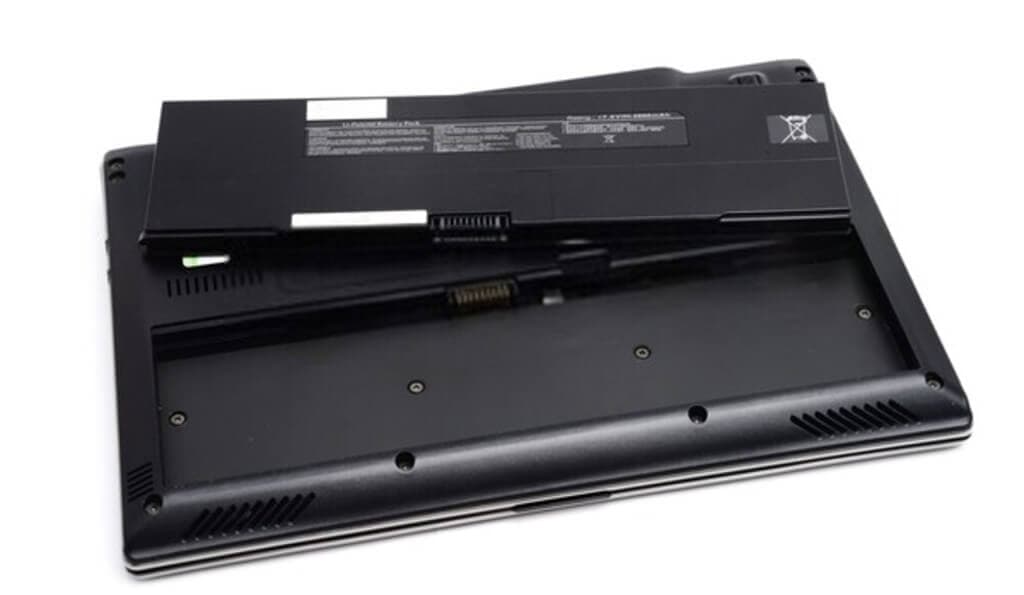
- "Remove the battery when using mains power." Laptop batteries have been sealed inside the chassis since roughly 2013. This advice is not just obsolete — following it means prying open your laptop for no benefit.
- "Charge a new laptop for 24 hours before first use." Modern battery controllers make this pointless; use it out of the box. (Details: how to charge a new laptop battery.)
- "Fully discharge it monthly to calibrate." Modern fuel gauges rarely need it, and deep discharges add wear.
- "Defragment your hard drive to save battery." 2026 laptops ship with SSDs; defragmenting is neither needed nor helpful.
When the battery does wear out
Replacement is worth it on a laptop you otherwise like: third-party batteries run roughly $20–60 and OEM parts about $70–150, plus labor if you don't DIY.
Repairability is also improving by law: the EU battery regulation requires that from February 2027, laptops sold in the EU have batteries end users can replace with common tools, with spare batteries available for at least five years. Expect easier battery swaps to spread to laptops everywhere as makers redesign for it — Framework laptops already work this way today.
Frequently asked questions
What is the average laptop battery life? In 2026, a mainstream ultrabook averages 10–16 hours of real mixed use per charge; budget models 6–10 hours; gaming laptops 2–6 hours (about 1–2 while gaming). As for lifespan, expect 3–5 years / 300–1,000 cycles before capacity noticeably fades.
How long should a laptop battery last on one charge? If a current-generation ultrabook can't get through 8+ hours of light work, something is off — check the battery report and what's running in the background. Gaming laptops are a different category: 2–4 hours unplugged is normal.
How long does a laptop take to charge? Most modern laptops charge from empty to about 50–80% in under an hour and finish (deliberately slower, to protect the battery) in roughly 1.5–2.5 hours total, depending on charger wattage. Many ship with fast-charge modes for the first 30 minutes.
Is it bad to leave a laptop plugged in all the time? Not the way it used to be. Modern charge management — especially with an 80% charge limit enabled — makes desk-bound life fine for the battery. Heat is the bigger enemy.
How do I know when to replace my laptop battery?
Run powercfg /batteryreport (Windows) or check System Settings → Battery (Mac). When full-charge capacity falls below ~70–80% of design capacity — or runtime no longer covers your needs — it's replacement time. A swollen battery, however, should be replaced immediately.
What does mAh mean for a laptop battery? Not much on its own — mAh only translates to energy once you know the voltage. Laptop batteries are properly rated in watt-hours (Wh): ultrabooks typically carry 40–70 Wh and gaming laptops 80–99.9 Wh. That odd 99.9 figure is deliberate — aviation rules allow lithium batteries up to 100 Wh on passenger aircraft without airline approval, so no laptop ships with more.
The bottom line
The average laptop battery in 2026 gives you a real workday per charge and three to five years of service — and the best thing you can do for it is enable your manufacturer's charge limit, keep the machine cool, and ignore the battery folklore of the 2010s. When capacity finally fades, a replacement battery costs far less than a new laptop, and it's about to get easier to install everywhere.

Tech enthusiast and founder of Technize. Passionate about making technology accessible and helping people make smarter buying decisions.