7 Best 13-Inch Laptops in 2026
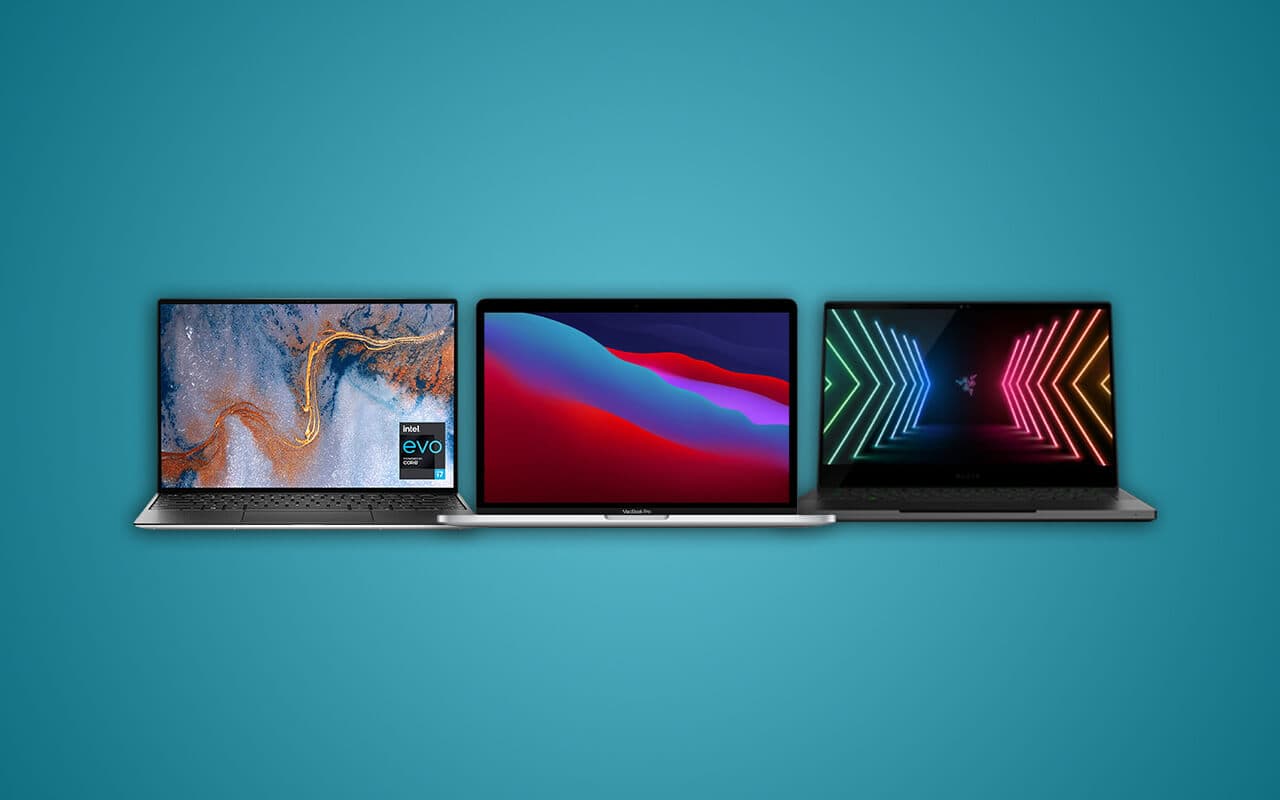
Disclosure: This post contains affiliate links. We earn a commission on purchases made through these links, at no extra cost to you.
The "13-inch laptop" category doesn't mean what it meant a few years ago. ASUS and Dell both currently sell 13.4-inch panels, Apple's Air spans 13.6 inches, Lenovo's smallest ThinkPad sits at 13.3, and once you cross into some of Acer and ASUS's 14-inch models, the size difference on your lap is barely noticeable. For this list we're covering the whole 13.0-to-14.0-inch class of genuinely portable laptops — anything bigger stops being a "small laptop" question and starts being a desktop-replacement question.
What you trade for that portability hasn't changed: fewer ports (most of these ship with two USB-C jacks and not much else), less headroom for sustained CPU and GPU loads because there's no room for a big fan, and — with one notable exception below — RAM and storage that are soldered to the board at the point of purchase, not upgradeable later. None of that makes these bad laptops. It means the buying decision is about picking the right trade-off, not finding a laptop that avoids one.
The previous version of this page recommended an M1 MacBook Air and an 11th-gen Intel Dell XPS 13, pointing at Amazon product links that no longer resolve. We rebuilt the list from scratch around current, mid-2026 hardware. Every model below is something you can actually buy today, not a 2021 holdover still ranking because nobody updated the page.
Quick comparison
| Model | Best for | Display | Weight | Typical price |
|---|---|---|---|---|
| Apple MacBook Air 13" (M5) | Best overall | 13.6" Liquid Retina, 2560×1664 | 2.7 lb | ~$1,099 |
| Dell XPS 13 (2026) | Best Windows laptop | 13.4" 2.5K, up to 120Hz touch | 2.2 lb | ~$699+ |
| Microsoft Surface Laptop 13" | Best battery life | 13" PixelSense touch, 1920×1280 | 2.7 lb | ~$900–$950 |
| HP OmniBook 7 Aero 13 | Best ultralight | 13.3", up to 2560×1600 IPS | 2.2 lb | ~$949–$1,359 |
| Framework Laptop 13 | Best repairable/upgradeable | 13.5" 3:2, 2256×1504 | 2.9 lb | ~$749–$1,049+ |
| Lenovo ThinkPad X13 Gen 7 | Best for business | 13.3" WUXGA | ~2.1 lb | ~$1,499+ |
| ASUS Zenbook 14 OLED (UM3406) | Best budget | 14" WUXGA/3K OLED | 2.8 lb | ~$900–$1,000 |
How we picked
We pulled specs from each manufacturer's own product and spec-sheet pages — Apple, Dell, Microsoft, HP, Framework, Lenovo, and ASUS all publish these directly — and cross-referenced them against independent review coverage from Notebookcheck, Tom's Hardware, Tom's Guide, and PCWorld, since manufacturer battery-life and weight claims routinely land on the optimistic side. We didn't test any of these ourselves; nobody on staff has seven review units sitting on a desk. What we did instead was confirm each model is a real, current-generation product actually being sold as of July 2026, not a two-year-old SKU still floating around Amazon's search results — which is exactly the trap the previous version of this page fell into. We skipped anything announced but not yet shipping (Acer's new Swift Air 14 looks like a genuine budget competitor, but it doesn't reach North America until August 2026) and anything discontinued outright, which turned out to include most of the 13-inch category's convertibles and every 13-inch gaming laptop — more on both below.
The picks
1. Apple MacBook Air 13-inch (M5) — best overall
Who it's for: anyone who wants the least fiddly choice on this list and doesn't need Windows for a specific piece of software.
Apple's M5 Air launched in March 2026 at $1,099 for 16GB of RAM and 512GB of storage — double the base storage of the outgoing M4 model, which Apple still sells at $999 for buyers who don't need the newer chip. The 13.6-inch Liquid Retina display (2560×1664) is unchanged from the M4 generation, and so is the fanless design: Apple's M-series chips run cool enough at this size that the Air still doesn't need active cooling, which also means it's silent under normal use. Apple rates it for up to 18 hours of battery life; treat that as a ceiling, not a typical day, but even a conservative real-world estimate puts it ahead of most Windows competitors here.
Pros:
- Fanless and silent, and still runs cool under everyday load
- 16GB RAM standard, up from Apple's previous default
- Two Thunderbolt 4 ports plus MagSafe, so charging doesn't eat one of your two USB-C ports
Con: two ports total. MagSafe frees one up for charging, but plug in an external monitor, a hub, and a peripheral at the same time and you're buying a dongle on day one. And if you need Windows-only software, Boot Camp is gone — you're running a VM or you're not running it at all.
2. Dell XPS 13 (2026) — best Windows laptop
Who it's for: Windows users who want build quality closer to a MacBook without giving up a cooling fan or Windows-native software.
Dell killed the XPS name in 2025, folded its whole lineup into a flat "Dell / Dell Pro / Dell Pro Max" naming scheme, then reversed course after the rebrand cost it customers and shelf space — the new XPS 13 (model DX13260) launched at Computex in June 2026 as the result. It's a 2.2-pound, CNC-aluminum laptop with a 13.4-inch 2.5K (2560×1600) touch display that runs up to 120Hz. The entry configuration uses Intel's low-power "Wildcat Lake" chip; a Panther Lake Core Ultra 7 355 tier follows later this summer. The starting price is $699 ($599 with a student discount), which is a genuinely unusual number to see on an XPS — Dell is positioning it directly against Apple's cheaper configurations.
Pros:
- $699 starting price undercuts everything else on this list by a wide margin
- 120Hz 2.5K touch display available even at the entry price, not locked behind a premium tier
- Up to 17 hours of claimed battery life
Con: the $699 configuration is built to hit the price, not to last — it pairs the efficiency-focused Wildcat Lake chip with 8GB of RAM, which contradicts the buy-16GB rule we lay out below. Treat the entry price as the headline and budget for a 16GB configuration (or the Core Ultra 7 355 tier arriving later this summer) if you plan to keep the laptop more than a couple of years.
3. Microsoft Surface Laptop 13-inch — best battery life
Who it's for: buyers who care more about unplugging for a full day than squeezing out maximum performance, and who've made peace with checking app compatibility first.
The 13-inch Surface Laptop runs on Qualcomm's Snapdragon X Plus, an 8-core Arm chip, and Microsoft rates it for up to 23 hours of video playback — the highest claim of any laptop on this list. It starts around $900–$950 depending on retailer and configuration, with 16GB of RAM and 256GB or 512GB of storage, and it weighs 2.7 pounds. The catch is the one that's followed every Arm-based Windows laptop since the first Surface Pro X: most mainstream software runs fine, either natively or through Microsoft's Prism emulation layer, but some professional tools, older drivers, and niche utilities still don't ship native Arm builds, and emulated performance is noticeably worse than running native code. If your daily tools are a browser, Office, and mainstream apps, you won't notice a thing. If you rely on something specialized, check compatibility before you buy, not after.
Pros:
- Longest claimed battery life on this list, by a meaningful margin
- Fanless and silent, like the MacBook Air
- 3:2 touch display gives you more vertical space for documents than the 16:10 panels elsewhere on this list
Con: Arm app compatibility on Windows is much better than it was in 2020, but it's still not universal — verify your specific software runs natively before buying, especially anything niche, older, or enterprise-specific.
4. HP OmniBook 7 Aero 13 — best ultralight
Who it's for: anyone who wants the lowest possible weight in a bag and doesn't mind trading some raw performance for it.
HP folded its Spectre and Envy lines into the OmniBook name in 2025, and the Aero 13 sits at the ultraportable end of that lineup. Notebookcheck's review headline called it the "world's lightest 13-inch laptop," and at under 1 kg (2.2 lb) that's not an exaggeration. It runs AMD's Ryzen AI 300 series (up to the Ryzen AI 7 350) rather than Intel, in configurations ranging from a $949 base model (16GB RAM, 1920×1200 display) up to a $1,359 config with 32GB of RAM and a sharper 2560×1600 panel. HP builds it from recycled metals and ocean-bound plastic, for whatever that's worth to you.
Pros:
- Genuinely under 1 kg — noticeably lighter in a bag than everything else on this list
- Configurable up to 32GB RAM and a 2560×1600 display
- Full-size ports: two USB-C, two USB-A, HDMI 2.1
Con: that weight comes from a smaller battery and a thinner chassis, so don't expect the heavier OmniBook Ultra line's thermal headroom — under sustained load it runs warmer and louder than its size suggests.
5. Framework Laptop 13 — best repairable and upgradeable
Who it's for: buyers who want to swap RAM, storage, ports, or eventually the whole motherboard instead of replacing the entire laptop — and Linux users specifically, since Framework ships and supports Linux directly rather than treating it as an afterthought.
Framework is the one laptop on this list where "buy 16GB now because you can't add more later" doesn't apply, because the RAM isn't soldered. The current Framework Laptop 13 runs AMD's Ryzen AI 300 series and uses two standard DDR5 SO-DIMM slots — buy it with 16GB and add more yourself later, or install your own from day one — our free RAM upgrade checker confirms compatible memory if you go that route. The port situation is just as unusual: instead of a fixed set of USB-C, USB-A, and HDMI, you pick from swappable Expansion Card modules that snap into four slots, so you configure the exact port mix you want and change it whenever your needs change. Pricing starts at $849 for a DIY edition you assemble yourself, $1,049 prebuilt, or $749 for the previous Ryzen 7040-series generation, which Framework still sells at a discount for buyers who don't need the newest chip. The 13.5-inch, 3:2 display (2256×1504) trails the sharper panels elsewhere on this list on raw resolution, but the taller aspect ratio gives you more vertical space for documents and code.
Pros:
- User-upgradeable RAM and storage — the actual exception to the soldered-RAM rule at this size
- Modular Expansion Card ports you reconfigure yourself, no dongles required
- Official, first-class Linux support, not just "it happens to boot"
Con: the 2256×1504 display resolution is noticeably behind the sharper OLED and 2.5K panels on the rest of this list, and the modularity comes with a heavier, thicker chassis than the ultralights above.
6. Lenovo ThinkPad X13 Gen 7 — best for business
Who it's for: IT departments and business buyers who prioritize a spill-resistant keyboard, MIL-SPEC durability testing, and a manufacturer that keeps parts and drivers available for years after purchase.
Lenovo's smallest ThinkPad dropped under 1 kg for the first time with the Gen 7 refresh, released in May 2026 — the Intel configuration starts at 930g (2.05 lb), the AMD configuration at 953g (2.1 lb). Both use current-generation chips: Intel Panther Lake (Core Ultra Series 3) or AMD Ryzen AI PRO 400 series, paired with a 13.3-inch WUXGA display. The starting price runs around $1,499, which looks steep against the specs on paper, but you're paying for ThinkPad-specific things: a keyboard that's still better than nearly anything else here, a fingerprint reader and IR camera as standard, and a parts-and-driver support lifecycle that matters more if you're provisioning a fleet of these than if you're buying one for yourself.
Pros:
- Under 1 kg while still running full-power Panther Lake or Ryzen AI PRO 400 chips, not a stripped-down low-power variant
- ThinkPad keyboard quality remains the benchmark other business laptops get measured against
- Long parts and driver support lifecycle, which matters more than most spec sheets convey
Con: $1,499 buys you a WUXGA (1920×1200) display, not an OLED or high-resolution panel — you're paying for durability and support here, not screen quality.
7. ASUS Zenbook 14 OLED (UM3406) — best budget
Who it's for: buyers who want a real OLED screen without paying flagship prices, and don't mind stepping up to a 14-inch footprint to get it.
This one is technically outside the 13-inch class by a fraction of an inch, but it's the honest budget answer for this list: a real OLED panel — either a 60Hz 1920×1200 option or a 120Hz 2880×1800 option — on a laptop that starts closer to $900 than the $1,300-plus that OLED usually costs elsewhere on this page. It runs AMD's Ryzen AI 7 350 with 16GB of RAM and up to 1TB of storage, weighs 2.82 pounds, and keeps a full-size port selection (Thunderbolt 4, USB-A, HDMI, microSD) that the ultralights above skip. If you specifically need 13.x inches and not 14, this isn't your pick — see the Dell XPS 13 above instead, which is both cheaper and smaller.
Pros:
- Real OLED display at a price that undercuts most competitors' non-OLED options
- Full-size port selection, no dongle required
- 16GB RAM and up to 1TB of storage at a genuinely accessible price
Con: it's a 14-inch laptop, not a 13-inch one — if screen footprint is the whole point of your search, this is the wrong pick regardless of the price.
Apple silicon vs. x86 vs. Snapdragon: what "compatibility" actually means
Three different chip architectures are competing in this size class now, and picking the wrong one causes real friction, not just a performance gap.
- Apple silicon (M4/M5): runs macOS only. Every mainstream Mac app is native; anything Windows-only requires a VM, and Boot Camp isn't coming back.
- x86 (Intel Panther Lake/Wildcat Lake, AMD Ryzen AI 300/400): runs Windows with full native compatibility for essentially everything, including older enterprise software and niche drivers. This is still the safe default if compatibility is a real concern.
- Snapdragon X (Arm): runs Windows through a mix of native Arm apps and Microsoft's Prism emulation layer for everything else. Coverage is much better than it was when Arm Windows launched, and most consumer software works fine, but check compatibility first if you depend on something specialized — certain CAD tools, enterprise VPN clients, or older utilities without an Arm build.
13 inches or 14? The gap has mostly closed
Three of the seven picks above (Dell's, HP's, and ASUS's, in different ways) sit right at the 13/14-inch line, and the honest answer is that the size gap that used to separate "ultraportable" from "everyday laptop" has largely disappeared. A 14-inch laptop with thin bezels today often weighs about the same as a 13-inch model from five years ago. If you're deciding between the two, screen size matters less than what you actually do with the laptop — see our breakdown of laptop screen sizes and, if you're wondering whether 13 inches specifically is too cramped for your use case, our answer to that exact question.
RAM: buy 16GB minimum, because you almost certainly can't add it later
Every laptop on this list soldered its RAM to the motherboard at the factory — except one. The Framework Laptop 13, pick #5 above, uses standard SO-DIMM slots you can open and upgrade yourself; everything else here is fixed for life the moment you check out. That makes the RAM decision at purchase time more important than it used to be. 16GB is the realistic floor for a laptop you expect to use for four or five years; 8GB configurations still show up on some budget SKUs and age badly within two. If you're not sure what your current machine has or whether it's worth upgrading versus replacing, our free RAM upgrade checker answers both in a few clicks.
Storage: more upgradeable than RAM, with one big exception
Storage is a more forgiving decision than RAM in this class. On the MacBook Air, the SSD is soldered — the capacity you pick at checkout is permanent, so size it honestly. Most of the Windows picks here use a small M.2 SSD that's technically replaceable if you're willing to open the bottom panel, though thin-and-light designs often use the shorter 2230-size drives with fewer upgrade options than a full-size stick, and opening a brand-new laptop for a swap isn't everyone's idea of a good weekend. Our free SSD upgrade checker tells you what a specific model actually accepts before you count on that path. Either way, start from a realistic estimate — our storage sizing guide covers how much is actually enough in 2026.
Battery life claims vs. reality
Every number in the comparison table above is a manufacturer claim, almost always measured as continuous local video playback at a fixed brightness — the best-case scenario a battery test can produce. Real-world mixed use (video calls, a dozen browser tabs, compiling code, a Slack notification pinging every ninety seconds) typically runs 25–40% below the advertised number. Apple's 18-hour claim on the MacBook Air, and Microsoft's 23-hour claim on the Surface Laptop, are both measured this way. Treat the numbers in the table as a ranking tool for comparing laptops against each other, not as a promise about your actual day.
What's missing: 2-in-1s and gaming
Two categories that used to have real entries in this size class basically don't anymore. HP's Spectre x360 13.5 — the convertible that used to anchor this list — is gone; HP replaced it with the OmniBook Ultra Flip, which only ships at 14 inches. We didn't find a current, actively-sold 13-inch convertible worth recommending, so we're saying that plainly instead of stretching a pick to fill the slot. And 13-inch gaming laptops are effectively extinct: Razer's Blade Stealth, the standard-bearer for the category, was discontinued, and nobody else has replaced it. If you want to game on something this size, you're looking at integrated graphics handling light titles or cloud gaming over a good connection — see the FAQ below.
Frequently asked questions
Is a 13-inch laptop too small? For most people, no — see our full answer on whether a 13-inch laptop is too small for the cases where it actually matters, mainly spreadsheet-heavy or multi-window work.
What's the best 13-inch laptop overall? The Apple MacBook Air 13-inch (M5) — fanless, silent, strong battery life, and the safest choice if you don't have a specific reason to need Windows. If you do need Windows, the Dell XPS 13 (2026) is the closest match on build quality, and it starts $400 cheaper.
Are 13-inch laptops good for students? Yes, for most majors — the portability and battery life fit a class-to-class, library-to-dorm schedule well. If your coursework leans into CAD, heavy simulation, or anything GPU-bound, look at our laptops for engineering students guide instead, since none of the laptops on this page have discrete graphics.
Can you game on a 13-inch laptop? Not seriously. Every laptop on this list uses integrated graphics — capable of older or lightweight titles at reduced settings, not current AAA games at native resolution. Cloud gaming (GeForce Now, Xbox Cloud Gaming) works reasonably well on any of these if your internet connection is solid, since it shifts the rendering off the laptop entirely. If gaming is a real priority, this isn't the category to shop in.
The final verdict
For most people, the Apple MacBook Air 13-inch (M5) is still the easiest recommendation on this list — fanless, quiet, strong battery life, and few ways to regret the purchase. If you need Windows specifically, the Dell XPS 13 (2026) at $699 is the best combination of price and build quality we found, and it's genuinely surprising to see that number on an XPS. Go with the Surface Laptop 13-inch if all-day battery life matters more than raw speed and you've checked your software runs on Arm; the HP OmniBook 7 Aero 13 if weight is the deciding factor; the Framework Laptop 13 if you want to open the thing up yourself someday; the ThinkPad X13 Gen 7 if you're buying for a business fleet rather than yourself; and the ASUS Zenbook 14 OLED if you want an OLED screen and can live with a 14-inch footprint instead of 13. Whichever you pick, buy 16GB of RAM at checkout — on six of these seven laptops, that decision is permanent.

Tech enthusiast and founder of Technize. Passionate about making technology accessible and helping people make smarter buying decisions.