9 Best Laptops with a Number Pad in 2026 (Full Numeric Keypad)
Disclosure: This post contains affiliate links. We earn a commission on purchases made through these links, at no extra cost to you.
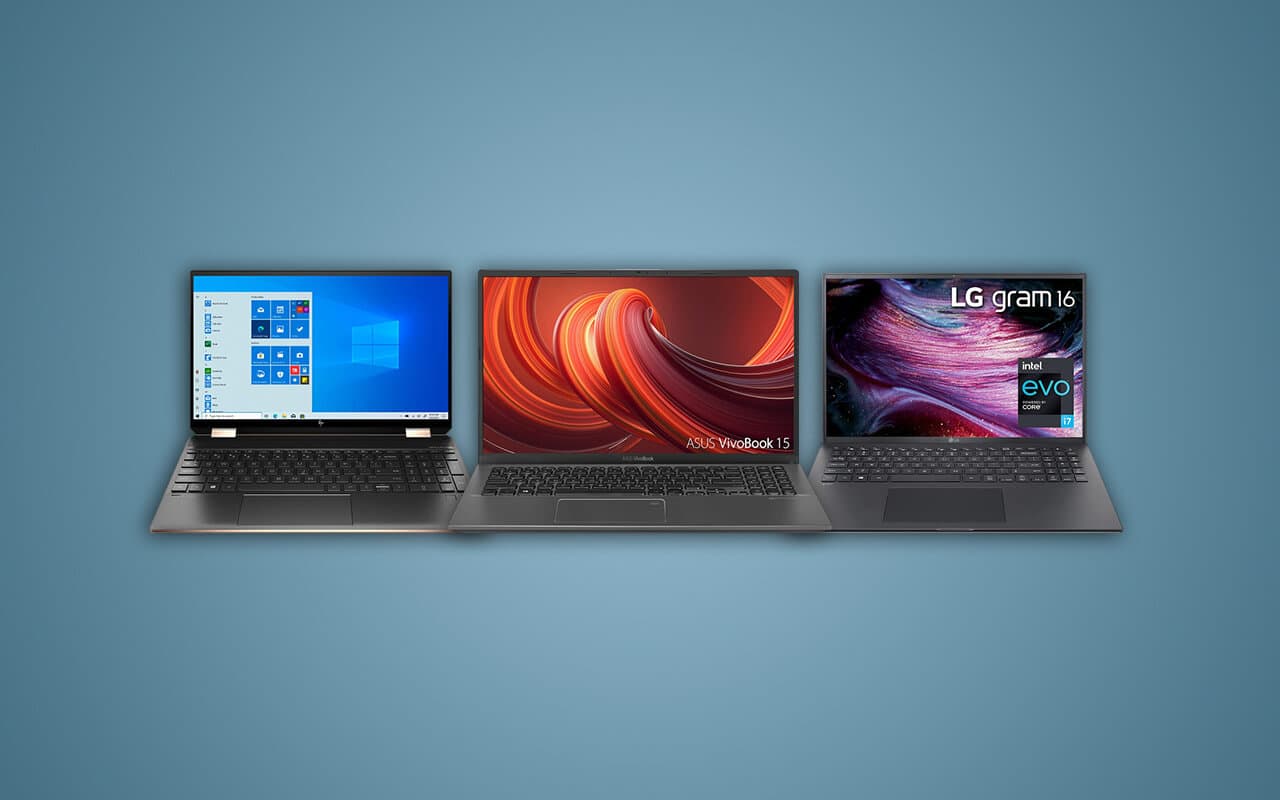
If your day happens inside Excel, QuickBooks, or a CAD program, a laptop without a numeric keypad charges you a small tax on every entry. Touch-typing 10-key beats reaching for the number row by a wide margin — and yet the number pad keeps disappearing. Premium thin-and-lights have quietly dropped it in favor of centered keyboards and bigger speakers, so screen size alone no longer tells you anything.
The rough rule still holds: you need a 15.6-inch or larger chassis, and 14-inch laptops essentially never have one. But plenty of big laptops skip it anyway, which is why every machine below was checked against a manufacturer spec sheet or a named hands-on review before it made the list. Nine picks, from a cheap 15-incher to a 17-inch ultralight that weighs about as much as a 13-inch MacBook Air.
Quick comparison
| Laptop | Size | Numpad quality | Price tier | Best for |
|---|---|---|---|---|
| Dell 16 Plus | 16" | Near full-size keys | Mid-range | All-day spreadsheet work |
| HP OmniBook 5 16 | 16" | Slightly undersized | Budget | Big screen, small outlay |
| Lenovo ThinkPad E16 Gen 3 | 16" | Good, narrower keys | Mid-range | Business typing, upgradeable RAM |
| LG gram 17 | 17" | Full pad, narrow keys | Premium | Travel without giving up 10-key |
| Acer Aspire Go 15 | 15.3" | Cramped, keys moved | Budget | The cheapest way in |
| ASUS Vivobook 16 | 16" | Full-size | Budget | Most laptop per dollar |
| HP 17 | 17.3" | Roomy, full 10-key | Budget | A desk-bound data-entry machine |
| ASUS Vivobook Pro 15 OLED | 15.6" | Two-thirds width | Premium | Creative work plus spreadsheets |
| ASUS TUF Gaming A16 | 16" | Noticeably small keys | Mid-range | Excel by day, games at night |
How we picked
One rule mattered more than the rest: a physical numeric keypad had to be confirmed on the exact model, not assumed from the screen size. We checked Lenovo PSREF, ASUS and Dell tech spec pages, and hands-on reviews from PCWorld, Notebookcheck, LaptopMedia and Laptop Mag. That check knocks out more machines than you'd expect. The Dell XPS 16 — briefly rebadged Dell Premium 16 before Dell brought the XPS name back in January 2026 — has no pad. Neither does the 16-inch MacBook Pro, nor any MacBook Apple has ever shipped. Most Lenovo Yoga and ASUS Zenbook 16 models leave it out too, and so do the thin gaming flagships: Razer Blade, ROG Zephyrus, Legion Slim. All of those get recommended in numpad roundups anyway. None of them belong here.
The second thing we looked at is how good the pad actually is, because "has a numpad" and "can you 10-key on it" are different questions. Fitting the pad shoves the main keyboard and trackpad left of the screen's centerline, and the pad's own keys are usually about three-quarters width with no gap separating them from the letters. That geometry has predictable costs even on the good implementations: your right hand lands a column off from where it expects Enter and Backspace, and the trackpad sits far enough left that right-clicks miss. Where that's bad, we say so in the entry.
1. Dell 16 Plus
Dell folded the old Inspiron 16 Plus into this one, model number DB16250, and it gets the number pad right in the way that matters: the keys sit close to desktop size, so sustained data entry doesn't mean retraining around a squeezed layout. Dell sells it with either a 1920×1200 or a 2560×1600 16:10 panel; the sharper one gives you a lot more rows before you have to scroll, which is the other half of the spreadsheet argument, so confirm the resolution on the listing before you buy.
Configurations run from a Core Ultra 5 226V up to an Ultra 9 288V, all Lunar Lake, all with long battery life and LPDDR5X memory soldered to the board. That last detail is the one to plan around — buy the RAM you need on day one, because there's no adding it later.
Price: Mid-range. Type: 16-inch mainstream.
Strengths: Keypad keys closer to desktop size than anything else here, paired with an optional sharp 2.5K screen and Lunar Lake battery life. Weakness: The deck flexes visibly if you're a heavy typist.
2. HP OmniBook 5 16
HP's mainstream 16-incher is the cheap pick that doesn't feel cheap to type on. PCWorld reviewed the 16-af1037nr, a Core Ultra 7 255U config, and put it plainly: "A numpad is provided and the numpad keys are a little undersized, but not by much." For a laptop at this price that's a good result — the compromises usually land on the keyboard first.
One warning before you click buy. HP sells the OmniBook 5 16 with Intel Core Ultra, AMD Ryzen AI, and Snapdragon X silicon under the same name, across a spread of 16-af and 16-ah SKUs, and the listings don't always make it obvious which one you're getting. Read the processor line and the display resolution in the listing, not the model name.
Price: Budget. Type: 16-inch mainstream.
Strengths: A genuinely pleasant keyboard and a 16-inch screen for the money, in a body that's light for its size. Weakness: The 1920×1200 IPS panel on the reviewed 16-af1037nr is dim and basic, and cheaper SKUs go lower still.
3. Lenovo ThinkPad E16 Gen 3
Lenovo's PSREF sheets for the E16 Gen 3 — machine types 21SR and 21SS on the Intel side, 21ST on the AMD side — list the same thing: a six-row spill-resistant keyboard with a numeric keypad and 1.5 mm of key travel. That travel figure is the whole reason to buy a ThinkPad. You get the typing feel, the TrackPoint, and — increasingly rare in 2026 — memory you can actually upgrade later instead of choosing forever at checkout.
The numpad keys are narrower than the main deck, which takes a few days of muscle-memory retraining. Most people adapt. Display and RAM ceiling vary by machine type, so check both in the listing. The E-series chassis sits a rung below the T-series in materials and display quality, so if you want the same keyboard in a nicer body, the ThinkPad T16 Gen 3 and HP EliteBook 860 both list numeric keypads in their spec sheets too.
Price: Mid-range. Type: 16-inch business.
Strengths: A full 1.5 mm of key travel per Lenovo's own spec sheets, with upgradeable RAM, spill resistance and real serviceability. Weakness: The base display is dim and low-contrast next to the pricier T-series.
4. LG gram 17
This is the machine people are describing when they search for "ultrabook with a number pad." A 17-inch 2560×1600 screen and a full four-column keypad in something a shade over three pounds still reads like a typo. The 77 Wh battery gets you through a working day, and the size means the pad is a real four-column layout rather than a compressed one — worth noting, because the smaller gram 16 squeezes its columns.
The 2026 gram Pro 17 is on sale in the US now: LG's own store lists 17Z90U-G.AU75U1, a Core Ultra 7 355 config with 16GB of LPDDR5X and a 512GB SSD, alongside 17Z90U-H variants with different memory and storage. The resolution and battery figures above are the gram Pro 17 spec — LG also sells older 17Z90S and 17Z90T gram 17s through retailers, so match the model code in the listing before you buy.
Price: Premium. Type: 17-inch ultralight.
Strengths: A 17-inch screen and a full 10-key at roughly three pounds, with battery life to match. Weakness: The keypad keys are narrow and butt straight up against the letter keys, with no separation gap between them.
5. Acer Aspire Go 15
The least expensive new numpad laptop from a brand with real support behind it. It does the job, and the matte 1920×1200 panel is better than the price suggests. But PCWorld's review of the AG15-51P-51OU is blunt about the keyboard: the pad is thin and cramped, and it "doesn't include the arithmetic keys in their usual place," which is exactly the wrong thing to change if you have 10-key muscle memory. There's no backlight either, and the convex keycaps give you little to feel your way by.
The 1920×1200 panel above is that model's. Acer sells the Aspire Go 15 under several SKUs — AG15-31P and AG15-51P among them — from Intel Core 3 N-series chips up to a Core i5, on both 15.3-inch and 15.6-inch panels, so check the resolution and processor in the listing rather than assuming.
Price: Budget. Type: 15-inch entry-level.
Strengths: Cheap, matte, and it puts a real number pad in front of students and light home-office users. Weakness: The relocated arithmetic keys break 10-key touch typing, which is the point of buying this category.
6. ASUS Vivobook 16
The M1607 is the value sweet spot: a Ryzen AI 7 350, a full-size backlit keyboard with dedicated numeric keys, and ASUS's spec sheet confirms 16GB of DDR5 on board plus a free SO-DIMM slot, so you can take it to 32GB yourself. Very few laptops at this price still let you do that.
The display is where the money was saved. It's a 16-inch 1920×1200 panel at 60 Hz, 300 nits, and 45% NTSC coverage — fine for spreadsheets, not for photo work. The trackpad also sits noticeably left of center, which is the standard numpad tax.
Price: Budget. Type: 16-inch mainstream.
Strengths: Current-generation Ryzen AI silicon, full-size numpad keys, and RAM you can upgrade after purchase. Weakness: The panel is dim with poor color coverage.
7. HP 17
If the laptop is going to sit on a desk and never move, 17.3 inches is the cheapest route to a roomy, properly spaced 10-key. HP has kept this line alive for years and it's stocked everywhere: the 17-cn series on Intel and the 17-cp series on AMD, with no single spec that covers both.
The catch is the panel lottery. HP still ships plenty of 17-cn and 17-cp SKUs with a 1600×900 HD+ display, which at this size looks genuinely bad, alongside FHD versions that look fine. The resolution is buried in the listing text rather than the product name, so read it before you buy — it's the single biggest difference between a good purchase and a regretted one here.
Price: Budget. Type: 17-inch desktop replacement.
Strengths: The roomiest number pad you can buy cheaply, on a big screen, from a widely stocked line. Weakness: The low-resolution panels on the cheapest configurations are hard to look at all day.
8. ASUS Vivobook Pro 15 OLED
A rare combination: a 15.6-inch 3K 120 Hz OLED, a discrete RTX 4050 with a MUX switch, and a physical number pad. Most laptops that get the first two drop the third. ASUS also puts its DialPad in the trackpad corner — a virtual rotary control for brush size and timeline scrubbing that's genuinely useful in Adobe apps.
The keypad runs roughly two-thirds width, so it's a compromise pad rather than a desktop one, and the half-height cursor keys are an odd choice on a machine with this much deck space.
Price: Premium. Type: 15-inch creator.
Strengths: A color-accurate OLED and a real GPU without giving up the number pad. Weakness: The pad is two-thirds width, so heavy 10-key users will feel the squeeze.
9. ASUS TUF Gaming A16
Here's the pattern worth knowing about gaming laptops: the thin premium lines drop the number pad, and the mainstream lines keep it. Razer Blade, ROG Zephyrus and Legion Slim, no. ASUS TUF, Lenovo LOQ, HP Victus and Acer Nitro, yes.
The TUF A16 is the best of that group. The 2025 line is the FA608 series, and the config worth naming is FA608UM-NS73: a Ryzen 7 260 with an RTX 5060 and a 16-inch 2560×1600 165 Hz panel, with better battery life than a gaming laptop has any right to. Memory and panel vary across FA608 SKUs, so check both. Its keypad keys are noticeably smaller than the main set, which is the trade-off for fitting RGB backlighting and a full layout into 16 inches. The Lenovo LOQ 15 with the same GPU class is the other reasonable option, though its trackpad is shifted far enough left to invite accidental right-clicks.
Price: Mid-range. Type: Gaming.
Strengths: Real RTX 5060 gaming performance with a full keyboard layout and unusually good battery for the category. Weakness: The keypad keys are small enough that fast 10-key entry suffers.
What if my laptop doesn't have a number pad?
An external USB or Bluetooth 10-key is cheap, needs no drivers, and gives you full desktop-size keys — for anyone who only 10-keys at a desk, it beats reshaping your whole laptop purchase around one feature.
The other option is ASUS NumberPad 2.0, an LED keypad projected inside the touchpad on many numpad-less Zenbooks and Vivobooks. Tap the corner icon to toggle it; the surface still works as a cursor. It's the closest thing to a keypad on a 14-inch laptop, but it's Windows-only, has no tactile feedback, and availability varies by SKU. Mac users have one route only: Apple's Magic Keyboard with Numeric Keypad, or any third-party Bluetooth pad.
Frequently asked questions
Do all 15-inch laptops have a number pad? No. Budget and mainstream 15.6-inch and 16-inch laptops almost always do, but premium thin-and-lights deliberately leave it out to keep the keyboard centered and make room for larger speakers. The Dell XPS 16, the 16-inch MacBook Pro, and many Lenovo Yoga and ASUS Zenbook 16 models have no pad at all. Check the spec sheet rather than inferring from the screen size.
Why don't MacBooks have a number pad? Apple has never shipped one, at any size, in any year. The design prioritizes a centered typing position, symmetrical speaker grilles and a very large trackpad. For 10-key on a Mac you use an external pad — Apple's own Magic Keyboard with Numeric Keypad at a desk, or a small Bluetooth pad on the road.
Is a laptop number pad full-size? Usually not quite. Laptop keypads typically have narrower keys than a desktop 10-key, a condensed column layout, and no gap separating them from the letters. The Dell 16 Plus comes closest to standard size, and the 17-inch machines — the LG gram 17 and HP 17 — have the roomiest pads. Budget 15-inch laptops squeeze them the hardest.
Can I add a number pad to a laptop? Yes, easily. A USB or Bluetooth external keypad needs no drivers, gives you full-size keys, and works with any laptop or Mac. Plenty of people pair one with a keypad-less ultrabook: portability on the move, fast 10-key at the desk.
Do gaming laptops have number pads? The mainstream lines usually do — ASUS TUF, Lenovo LOQ, HP Victus, Acer Nitro. The thin premium ones usually don't: Razer Blade, ROG Zephyrus, Legion Slim. Verify the specific model, because it varies within a brand.
Which number pad laptop should you choose?
For most people the Dell 16 Plus is the right call — the closest thing here to a desktop-size keypad, on a screen and battery worth having. If you travel, nothing matches what the LG gram 17 does: a 17-inch screen and a full 10-key at three pounds. Watching the budget, the ASUS Vivobook 16 gives you full-size keypad keys and upgradeable RAM, and if you type all day for a living, the ThinkPad E16 Gen 3 is the one your hands will thank you for.
And if the laptop you actually want doesn't have a pad, buy the external one. Related reading: our guides to the best 32GB RAM laptops for heavy spreadsheet and data work, the best laptops for programming, and how much RAM you actually need.

Tech enthusiast and founder of Technize. Passionate about making technology accessible and helping people make smarter buying decisions.