Dual Graphics Cards in 2026: What Two GPUs Can (and Can't) Do
Disclosure: This post may contain affiliate links. If you purchase through these links, we may earn a small commission at no extra cost to you.
Let's answer the question directly, because the answer has completely changed since this article was first written:
For gaming, dual graphics cards are dead. SLI and CrossFire — the technologies that once let two cards render a game together — are gone. No current NVIDIA or AMD card supports them, and no modern game engine does either. Two graphics cards will not give you more FPS in 2026; one better card always will.
For everything else, multi-GPU is quietly thriving. Local AI, 3D rendering, video production, and virtual machines all put second (and third) GPUs to real work.
Here's what happened, what two GPUs actually do today, and whether you're in one of the groups that genuinely benefits.
What happened to SLI and CrossFire?
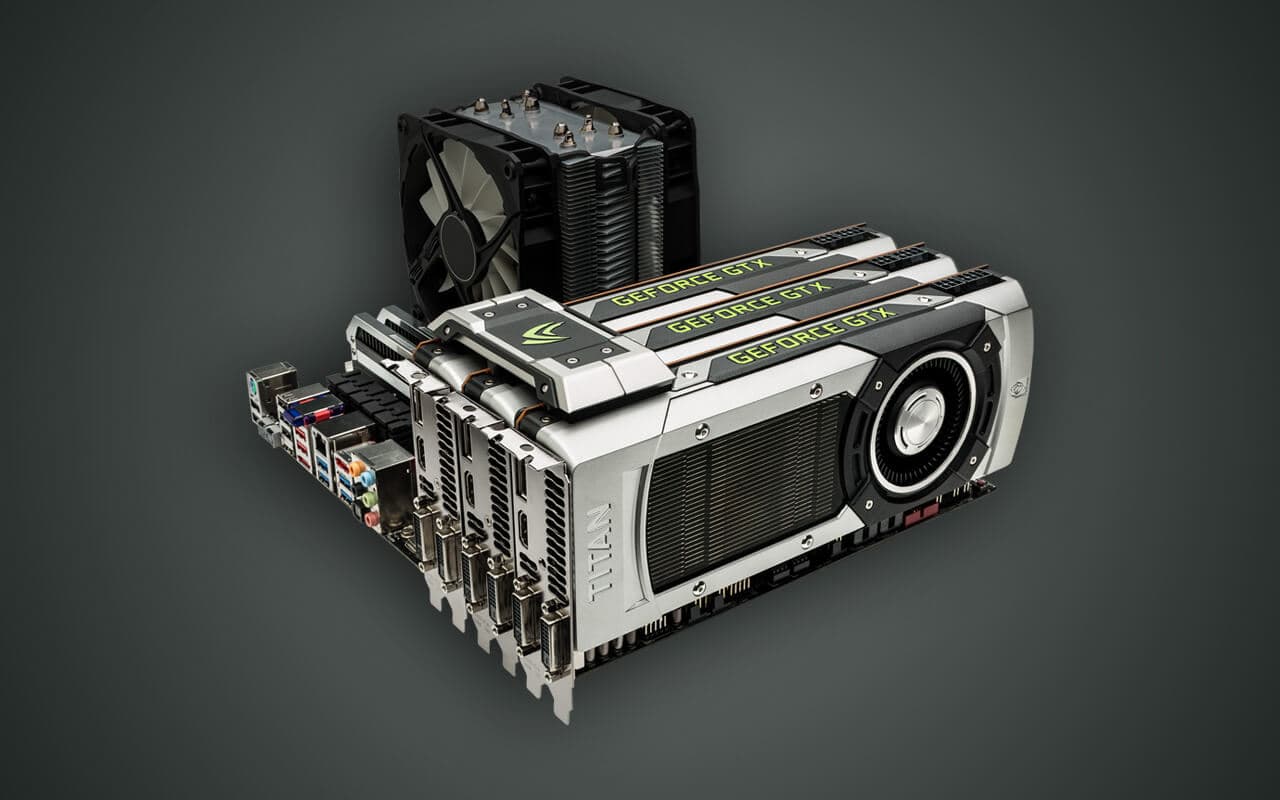
For readers who missed the era: SLI (NVIDIA) and CrossFire (AMD) let two matched cards split the work of rendering each frame. It was always finicky — game-by-game support, stuttery frame pacing — and both vendors walked away from it:
- AMD dropped CrossFire with the RX 5000 series back in 2019, citing that fewer than 1% of gamers used multi-GPU. No Radeon card since supports it.
- NVIDIA stopped creating new SLI driver profiles on January 1, 2021. The RTX 3090 was the last consumer card with an NVLink connector; the RTX 40 and 50 series removed the hardware entirely.
- DirectX 12 technically still contains "explicit multi-adapter," which let games use two GPUs directly — a handful of titles like Ashes of the Singularity tried it in the 2010s, and essentially no new game has since.
So the classic premise of this article — "combine two budget cards to match one expensive card" — is no longer possible in games at any price. If your goal is higher FPS, the answer is a single faster GPU, full stop. (Start with whether a new graphics card improves FPS.)
What does having 2 GPUs do, then?
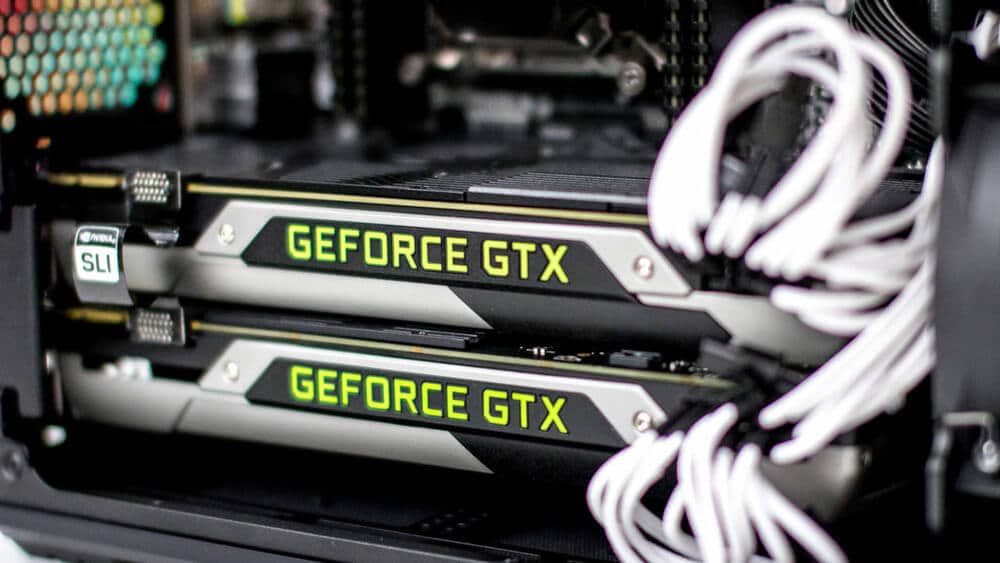
In 2026, two graphics cards in one PC means two independent processors, not one combined one. Each card does its own job. That's useless for rendering a single game frame faster — but very useful when you have workloads that split cleanly:
1. Local AI — the new king of dual-GPU builds
The people buying two graphics cards today are mostly running AI models at home. Large language models are limited by VRAM, and inference frameworks (vLLM, ExLlama, llama.cpp) can split a model's layers across multiple cards. Two used 24GB RTX 3090s — the classic budget AI rig — yield 48GB of usable model space for far less than any single 48GB card.
Crucially, this works over plain PCIe — no SLI bridge or NVLink required. AI splits the model so each GPU computes its own portion, with only modest communication between cards. That's exactly the kind of parallelism gaming could never achieve, because a game needs both cards to cooperate on the same frame in under 16 milliseconds.
2. 3D rendering and video production
- Blender (Cycles), V-Ray, and Octane can render on multiple GPUs at once. Scaling is real but not magic — a second card typically adds 30–60% in Cycles, closer to 2x in Octane/V-Ray.
- DaVinci Resolve Studio (the paid version — the free one is single-GPU) scales color grading and effects nicely across two cards, though its Fusion compositing page actually prefers a single GPU.
For professionals billing by the hour, a second GPU can pay for itself. Note that VRAM does not pool in most render engines — the scene must fit in each card's memory.
3. GPU passthrough for virtual machines
Linux and homelab users run one GPU for the host system and hand a second one directly to a virtual machine (VFIO/Proxmox passthrough) — a full-speed Windows gaming VM inside a Linux box, or an isolated work environment. Two GPUs make this dramatically easier than single-GPU passthrough.
4. The odd one out: the return of the PhysX card
A 2025 curiosity worth knowing: RTX 50-series cards dropped 32-bit CUDA support, which broke GPU-accelerated PhysX in classic games like Borderlands 2 and the Batman Arkham series. Some RTX 5090 owners literally installed a cheap older NVIDIA card as a dedicated PhysX processor to fix it. NVIDIA has since restored support for a curated list of classic titles in its drivers — but it was a fun reminder that "second GPU with one job" still occasionally makes sense.
Do I need two graphics cards for dual monitors?
No. This is one of the most common reasons people ask about dual GPUs, and it hasn't been true for well over a decade. A single modern graphics card drives three or four displays on its own — check the ports on the card. Even basic integrated graphics handle two or three monitors fine for desktop work.
And here's the thing: your PC probably already has two GPUs. Most CPUs include integrated graphics, and the motherboard's HDMI/DisplayPort outputs are wired to it. Plugging an extra monitor into the motherboard while your main displays use the graphics card is a perfectly good way to add screens without buying anything. (How to check which graphics your machine has.)
What you need to run two GPUs (for the workloads that use them)
If you're in the AI/rendering/VM group, the requirements are much simpler than the SLI era — no matched cards, no bridge connector:
- Motherboard with two usable PCIe x16-size slots. On mainstream boards, the CPU's 16 lanes usually split to x8/x8 with two cards. For gaming that split costs almost nothing; for AI and rendering it's workable, though workstation platforms with more lanes scale better.
- A power supply with headroom. Add both cards' power draw to your CPU's and leave margin — two big cards typically means an 850W+ unit.
- Case space and airflow. Two triple-fan cards stacked together run hot; blower-style or water-cooled cards, or a spacious case, help a lot. (And with modern card weight, mind the GPU sag.)
- Cards don't need to match. Compute workloads happily use mismatched cards — a 3090 and a 4090 can serve the same AI model. Mixing GPU vendors is also possible for compute, though sticking to one vendor's driver stack keeps life simpler.
Frequently asked questions
Can you have 2 graphics cards in one PC? Physically, yes — nothing stops you, and compute workloads (AI, rendering) will use both. What you can't do anymore is combine them to render games faster; SLI and CrossFire are discontinued.
Are dual GPUs worth it for gaming? No. No current hardware or games support multi-GPU rendering. One $800 card will always beat two $400 cards in games — put the whole budget into the single best GPU you can afford.
What does 2 GPUs do in 2026? Two independent jobs: bigger AI models split across both cards' VRAM, faster 3D/video rendering in apps that scale, a dedicated GPU for a virtual machine, or extra display outputs. They do not team up on one game.
Dual graphics cards vs a single card — which is better? A single card, for almost everyone. The exceptions are workload-specific: local LLMs that don't fit in one card's VRAM, render farms, and VM passthrough. If you don't recognize your use case in that list, buy one good card.
What were SLI and CrossFire? NVIDIA's and AMD's multi-card gaming technologies from roughly 2004–2020. They linked two matched cards over a bridge connector to alternate or split frame rendering. Inconsistent game support and frame-pacing problems killed them: AMD stopped after 2019's RX 5000 launch, and NVIDIA ended new SLI profiles in January 2021.
The bottom line
The 2022 version of this article told you dual graphics cards were worth it for serious gamers. In 2026 that advice would waste your money — gaming multi-GPU is dead, and a single modern card is faster, simpler, and cheaper than any two-card setup ever was.
But don't write off the concept. Two GPUs are now a specialist's tool: the home-AI builder stacking VRAM, the 3D artist cutting render times, the tinkerer passing a card into a VM. If that's you, the good news is you no longer need matched cards, bridges, or blessed motherboards — just slots, power, and airflow.
Upgrading a single card instead? See whether the GTX 1080 is still good in 2026 and our comparison of the GTX 16 series vs 10 series for where the used and budget market stands.

Tech enthusiast and founder of Technize. Passionate about making technology accessible and helping people make smarter buying decisions.