GTX 16 Series vs 10 Series in 2026: The Answer Just Changed
Disclosure: This post contains affiliate links. We earn a commission on purchases made through these links, at no extra cost to you.
For years, the honest answer to "is the GTX 16 series better than the 10 series?" was it depends — a GTX 1660 Ti and a GTX 1070 traded blows, and nothing in the 16 series touched a GTX 1080 Ti.
In October 2025, the answer stopped depending. NVIDIA shipped the last Game Ready driver for the entire GTX 10 series (Pascal), ending nine years of support. The GTX 16 series (Turing) was not included in that cutoff — it shares a driver branch with the RTX cards and still receives regular Game Ready drivers in 2026.
That single fact now outweighs every spec-sheet comparison below. If you're choosing between these two series on the used market today, the 16 series is the better buy at similar money — not because it's faster (it often isn't), but because it's still alive.
The quick verdict
- Driver support: GTX 16 series still gets Game Ready drivers; GTX 10 series gets security-only updates through roughly October 2028, with no new game optimizations or bug fixes ever again.
- Raw speed: a GTX 1660 Ti roughly matches a GTX 1070. The GTX 1080 and 1080 Ti still beat everything in the 16 series — the 1080 Ti lands near an RTX 3060 in pure raster performance.
- New AAA games: neither series has ray-tracing hardware, so both are equally locked out of the growing list of games that require it.
- Streaming and recording: the 16 series wins clearly, thanks to Turing's much better NVENC encoder.
- Power: the 16 series is more efficient — every card in it runs on 75–120 W.
Driver support: the deciding factor
NVIDIA's support plan, announced in 2025, drew the line at architecture generations:
- Maxwell, Pascal, and Volta — which means every GTX 10-series card, from the 1050 to the 1080 Ti — received their final Game Ready driver in October 2025. They now get only quarterly security patches for about three years.
- Turing and newer — which includes the whole GTX 16 series alongside the RTX 20, 30, 40, and 50 series — remain fully supported. NVIDIA hasn't announced an end date for Turing driver support.
What this means in practice: when a new game ships with a Pascal-specific rendering bug, it will never be fixed. A GTX 1660 owner keeps getting day-one optimized drivers; a GTX 1070 owner is frozen in time. Your installed games didn't get slower in October 2025 — but the 10 series' future ended there.
We covered the Pascal side of this story in more depth in our look at whether the GTX 1080 is still good in 2026.
Gaming performance: mostly a wash in the middle
Driver news aside, the old performance picture still holds. The 16 series was never a full generation leap — it was Turing's architecture without the RT and Tensor hardware, aimed at the midrange.
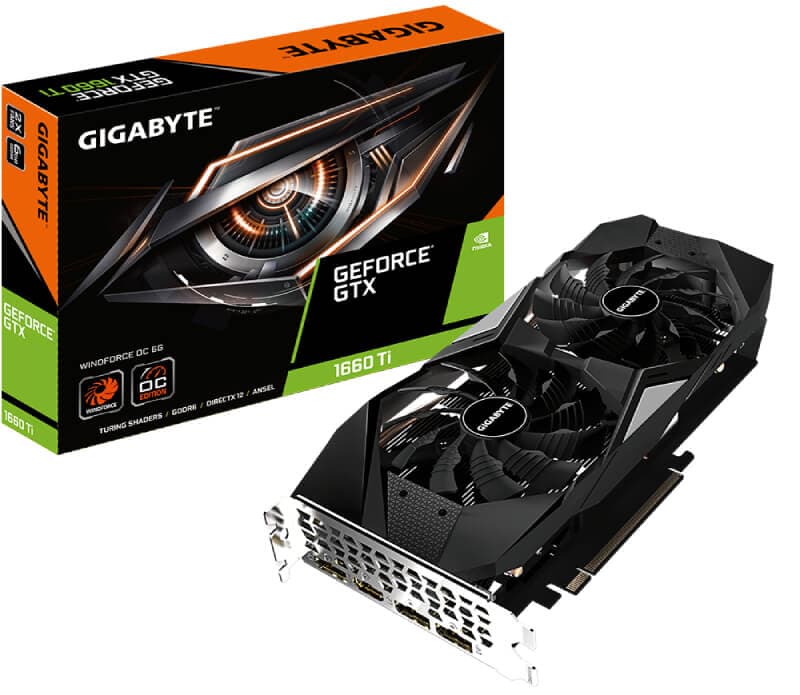
The rough equivalences, from aggregate benchmark data:
- GTX 1660 Ti ≈ GTX 1070 — within a few percent of each other, with the 1660 Ti drawing about 25% less power.
- GTX 1660 Super sits just below the 1660 Ti, still comfortably ahead of a GTX 1060.
- GTX 1650 is an efficiency play (75 W, no power connector on many models), a clear step up from the GTX 1050 Ti but no match for a 1060 6GB.
- GTX 1070 Ti, 1080, and 1080 Ti remain above everything in the 16 series. The 1080 Ti's raster performance still lands around an RTX 3060.
For esports — CS2, Fortnite competitive settings, Valorant, Rocket League — every card from the GTX 1060/1650 up still delivers smooth 1080p today. CS2's official minimum is just 1 GB of VRAM. The pain is in new AAA releases, which brings us to the real shared weakness.
Both series are locked out of the ray-tracing era
Here's the part that matters more than the 16-vs-10 rivalry: neither series has ray-tracing hardware, and big releases have started requiring it.
- Indiana Jones and the Great Circle requires an RT-capable GPU — minimum RTX 2060 / RX 6600 class. GTX 1660 Ti owners hit a Vulkan ray-query error at launch; the game won't run.
- DOOM: The Dark Ages requires hardware ray tracing and 8 GB of VRAM minimum (RTX 2060 Super / RX 6600 class). No GTX card qualifies.
- Assassin's Creed Shadows uses ray tracing even at its lowest settings and lists RT-capable minimums.
The 16 series' newer architecture buys it nothing here — Turing GTX cards have no RT cores, so they're excluded exactly like Pascal. And note the second bar: several of these games want 8 GB of VRAM as a floor, which only the GTX 1070 Ti, 1080, and 1080 Ti clear (and they fail the RT check anyway).
Neither series ever got DLSS either — that needs RTX Tensor cores. Both can use AMD's FSR 2/3 upscaling and Intel's XeSS in its universal (DP4a) mode, which remain the best tricks for stretching these cards in supported games.
Where the 16 series clearly wins: streaming and encoding
The GTX 16 series carries Turing's NVENC video encoder, and it's a genuine generational jump over Pascal's: roughly 15% better H.264 efficiency and 25% better HEVC efficiency, with HEVC B-frame support. Turing NVENC quality is commonly rated on par with x264's "slow" preset — good enough to stream from the same PC you game on with negligible performance cost.
If you record gameplay or stream on a budget, that's a real, everyday advantage for a 1650 Super or 1660-class card over any 10-series card.
Spec comparison table
| Card | Architecture | CUDA cores | Boost clock | Memory | TDP |
|---|---|---|---|---|---|
| GTX 1050 | Pascal | 768 | 1,518 MHz | 2–3 GB GDDR5 | 75 W |
| GTX 1050 Ti | Pascal | 768 | 1,392 MHz | 4 GB GDDR5 | 75 W |
| GTX 1060 | Pascal | 1,280 | 1,708 MHz | 3–6 GB GDDR5 | 120 W |
| GTX 1070 | Pascal | 1,920 | 1,683 MHz | 8 GB GDDR5 | 150 W |
| GTX 1070 Ti | Pascal | 2,432 | 1,683 MHz | 8 GB GDDR5 | 180 W |
| GTX 1080 | Pascal | 2,560 | 1,733 MHz | 8 GB GDDR5X | 180 W |
| GTX 1080 Ti | Pascal | 3,584 | 1,582 MHz | 11 GB GDDR5X | 250 W |
| GTX 1650 | Turing | 896 | 1,590 MHz | 4 GB GDDR5/GDDR6 | 75 W |
| GTX 1650 Super | Turing | 1,280 | 1,725 MHz | 4 GB GDDR6 | 100 W |
| GTX 1660 | Turing | 1,408 | 1,785 MHz | 6 GB GDDR5 | 120 W |
| GTX 1660 Super | Turing | 1,408 | 1,785 MHz | 6 GB GDDR6 | 125 W |
| GTX 1660 Ti | Turing | 1,536 | 1,770 MHz | 6 GB GDDR6 | 120 W |
Every card here is long discontinued — anything you buy today is used or refurbished stock.
Used prices in 2026
The used market has fully deflated from the shortage years. Ballpark eBay figures as of mid-2026:
- GTX 1650: around $70–80
- GTX 1660 Super / 1660 Ti: roughly $100–130 (check used listings)
- GTX 1080: around $90–150
- GTX 1080 Ti: around $130–160
Notice the problem: a 1660 Super and a 1080 cost similar money, and the 1080 is faster. Two years ago that made the 1080 the obvious pick. Today we'd still take the 1660 Super for a budget esports build — it's the one that keeps getting drivers, sips power, and encodes better. Buy the 10-series card only if you need its extra VRAM and raw speed for older games and you're comfortable running on frozen drivers.
Should you buy either series in 2026?
As a stopgap for esports and the enormous pre-2023 back catalog: sure, at sub-$150 money. As your main GPU going forward: we wouldn't. The mandatory-ray-tracing requirement lists make RT hardware non-optional for new AAA games, and current budget cards clear that bar at reasonable prices:
- Intel Arc B580 12GB (~$250–300) — the consensus budget value pick, with 12 GB of VRAM.
- AMD RX 9060 XT 16GB (~$380–450 street) — the mainstream favorite this generation.
- NVIDIA RTX 5060 Ti 16GB (~$430+ street) — the NVIDIA route, with DLSS 4.
A bonus of upgrading from either GTX series: these are all modest-power cards, and both GTX series ran on 75–250 W. For anything at the 1660/1070 tier (120–150 W), no PSU upgrade is needed for any of the three cards above.
Frequently asked questions
Is the GTX 16 series better than the 10 series in 2026? For a purchase today, yes — not on speed (a 1660 Ti ≈ a 1070) but on support. The 16 series still receives Game Ready drivers; the 10 series stopped getting them in October 2025.
Is the GTX 10 series still supported? Game Ready driver support ended in October 2025. NVIDIA continues quarterly security-only updates through roughly October 2028. The cards still work, but new games will never get Pascal optimizations or fixes.
What does "GTX 16 series" mean on a laptop? Laptops sold around 2019–2021 shipped with mobile versions of these chips — most commonly the GTX 1650, 1650 Ti, and 1660 Ti. They're Turing GPUs without ray-tracing hardware, and the same story applies: still driver-supported, still fine for esports, locked out of RT-mandatory games. Here's how laptop GPUs differ from desktop cards.
Can a GTX 1660 Ti run DOOM: The Dark Ages or Indiana Jones? No. Both games require a GPU with hardware ray tracing (RTX 2060 class or newer), and the GTX 16 series has no RT cores. This isn't a settings problem — the games won't launch.
Can these cards use DLSS? No — DLSS requires RTX Tensor cores. Both series can use AMD FSR 2/3 and Intel XeSS (DP4a mode), which are the best ways to lift frame rates in games that support them.
The final verdict
The spec-sheet debate is settled by something that isn't on the spec sheet. The GTX 1080 Ti is still the fastest card either series ever produced, and it no longer matters: the 10 series is on life support, the 16 series is still supported, and neither can run the new games that require ray tracing.
If one of these is in your PC now, it will keep doing what it already does — see our guide to squeezing more FPS out of an aging graphics card. If you're shopping used at $100–150, take the 16 series for the drivers. And if you're deciding whether a bigger card is worth it, start with our deep dive on whether the GTX 1080 is still good in 2026 — the answer there flipped this year too.

Tech enthusiast and founder of Technize. Passionate about making technology accessible and helping people make smarter buying decisions.