Dell vs Lenovo (2026): Which Laptop Brand Should You Buy?
Disclosure: This post contains affiliate links. We earn a commission on purchases made through these links, at no extra cost to you.
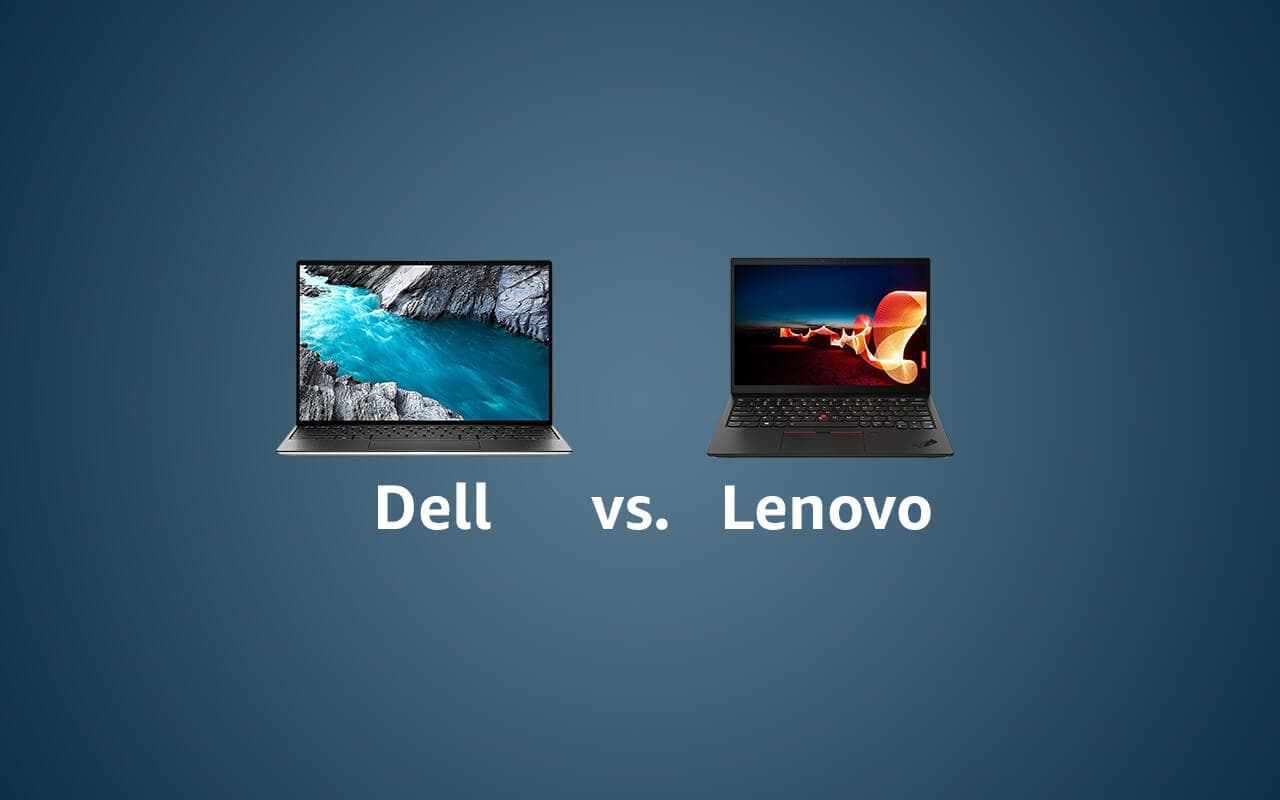
There's no single winner between Dell and Lenovo — it genuinely depends on which segment you're shopping in. Lenovo is the larger company by global shipments and has the stronger case in business durability and budget-to-midrange value; Dell competes hardest in US enterprise and government accounts and just revived its XPS name for a new premium-consumer push. Here's the honest, segment-by-segment breakdown instead of a fake overall pick.
Dell vs Lenovo at a glance
| Segment | Better pick | Why |
|---|---|---|
| Business durability & keyboards | Lenovo (ThinkPad) | ThinkPad's keyboard and chassis reputation is still the industry benchmark |
| Premium consumer | Close call | Dell's revived XPS vs Lenovo Yoga — compare the specific model |
| Budget | Lenovo (IdeaPad), usually | IdeaPad Slim/LOQ often undercut Dell's Base tier, but check current sales |
| Gaming | Lenovo (Legion), especially budget | Legion and LOQ span premium-to-budget; Dell dropped its budget G-series |
| Workstation | Close call | ThinkPad P-series vs Dell Pro Precision/Pro Max — both are serious, pick by GPU/config |
Both brands renamed everything — here's the current map
If you haven't shopped either brand in a couple of years, the model names you remember are mostly gone.
Dell blew up its naming at CES 2025: Inspiron became plain Dell, Latitude became Dell Pro, and Precision became Dell Pro Max, all layered with a Base / Plus / Premium tier system (e.g., Dell 14 Plus, Dell Pro 14 Plus, Dell 16 Premium). The XPS name was retired in that same overhaul — then revived in 2026: Dell showed a new XPS 13 at Computex 2026, starting at $699 ($599 for students), with a 13.4" 2.5K 120Hz display and a 2.2 lb aluminum chassis, and positioned it as an ongoing line rather than a one-off. Workstations got another twist in 2026 too — Precision came back as Dell Pro Precision, while Dell Pro Max now refers to a separate AI-workstation class (like the Dell Pro Max with GB300, an NVIDIA Grace Blackwell dev box that ships with Ubuntu Linux preinstalled). Latitude and Inspiron stay retired. For the full breakdown, see our Dell laptop series guide.
Lenovo's structure has stayed more stable: ThinkPad (business), ThinkBook (small-business/prosumer), Yoga (premium consumer), IdeaPad (mainstream consumer), Legion (gaming), and LOQ (budget gaming, launched 2023). The newest addition is the ThinkPad X9, announced at CES 2026 under Lenovo's Aura Edition program — a joint Lenovo/Intel spec tier with co-engineered hardware and bundled AI features that now also touches flagship Yoga and IdeaPad models. Full details in our Lenovo laptop series guide.
Market position
Per Q1 2026 IDC shipment data, Lenovo holds the global #1 spot at roughly 25.2% share, HP is #2 at about 18.5%, and Dell sits #3 at roughly 15.7%. That's a volume ranking, though — it doesn't capture where each brand actually wins deals. Dell remains especially strong in US enterprise and government procurement, where its ProSupport contracts and fleet-management tooling are deeply entrenched; Lenovo's edge is global volume and consumer/budget reach, plus the ThinkPad brand's long institutional following outside the US.
Business laptops: ThinkPad vs Dell Pro
This is Lenovo's strongest segment. ThinkPad's keyboard — deep key travel, the red TrackPoint nub still present after decades — has a cult following that Dell Pro's keyboards, while perfectly good, don't match. Current comparison points: the ThinkPad T14 Gen 7 and slimmer T14s Gen 7 against the Dell Pro 14 Plus; the flagship ThinkPad X1 Carbon Gen 13 (Aura Edition, ~1kg carbon-fiber-and-magnesium chassis) against Dell's revived XPS 13 or higher Dell Premium tiers. Both brands build their business lines to a tougher spec than their consumer lines, with more magnesium/carbon in the chassis and generally better hinge and keyboard mechanisms — the gap between a ThinkPad and an IdeaPad, or a Dell Pro and a base Dell, is bigger than the gap between the two brands' business lines.
Premium consumer: Dell's revived XPS/Premium vs Lenovo Yoga
This one's genuinely close and worth comparing model-to-model rather than by brand. Dell's newly revived XPS 13 re-enters this space at an unusually low $699 starting price ($599 for students), while the redesigned XPS 14 and 16 cover the higher end — replacing the short-lived "Dell Premium" naming, which you'll now mostly see on leftover stock. Lenovo's Yoga Slim 7i (ultralight clamshell) and Yoga Pro 9i (creator-focused convertible, up to RTX 5070 and a 3.2K OLED display) are the comparable Lenovo picks. Neither brand has a clear overall edge here — check the specific configuration, since display quality and chassis materials vary a lot even within the same tier name.
Budget: IdeaPad vs Dell Base tier
Lenovo has historically had the edge in budget-to-midrange value, and that mostly still holds — IdeaPad Slim pricing tends to undercut Dell's Base-tier Dell 14/16 for comparable specs. That said, Dell runs frequent, deep sales on its Base tier, so this can flip depending on timing; don't assume either brand is cheaper without comparing the exact listings you're looking at. Current search links: Lenovo IdeaPad Slim and Dell 14.
Gaming: Legion/LOQ vs Alienware
Lenovo has the broader gaming lineup here. Legion spans budget-adjacent Legion Slim models up through the flagship Legion Pro 7i (Core Ultra 9, up to an RTX 5090 laptop GPU, 240Hz OLED), and LOQ covers true budget gaming ($700–$1,300, current-gen RTX GPUs) — see Lenovo Legion 5 and Lenovo LOQ 15. Dell discontinued its budget G-series in 2025 and consolidated gaming under Alienware, which remains a distinct, premium-leaning brand — current models include the Alienware 16 Aurora (which effectively replaced G-series at the entry/mid tier) and the higher-end Alienware 16X Aurora. Alienware's build quality and design are well regarded, but Dell no longer has a true budget-gaming answer to LOQ. Search: Alienware 16 Aurora.
Workstations: ThinkPad P-series vs Dell Pro Precision / Pro Max
Both brands take mobile workstations seriously and both are legitimate choices for CAD, 3D, and data-science work. Lenovo's ThinkPad P-series runs from the thin-and-light P14s/P16s up to the flagship P1 Gen 9 with RTX PRO Blackwell-generation laptop GPUs. Dell's 2026 lineup covers the same ground with Dell Pro Precision mobile workstations and, at the high end, AI-focused Dell Pro Max systems (like the GB300-equipped model built around NVIDIA's Grace Blackwell platform). Pick by GPU tier and certified software support (Dell and Lenovo both certify against major CAD/ISV software) rather than by brand.
Repairability and Linux support
Neither brand is meaningfully more repairable than the other — both publish official service manuals and parts-lookup tools, and neither offers the kind of universally interchangeable, cross-model parts that some online claims suggest (that myth isn't true for any major manufacturer; Framework is the real exception here, not Dell or Lenovo). Where both brands do stand out from most competitors is Linux support: Dell certifies select Dell and Dell Pro models for Ubuntu (current certified units include several Dell 14 and Dell 16 configurations), and Lenovo does the same across select ThinkPad models. If Linux compatibility matters to you, that's a genuine differentiator versus brands that don't bother with certification at all.
Reliability: the honest answer
There isn't good, current, brand-wide reliability data comparing Dell and Lenovo — most of the "most reliable laptop brand" surveys you'll find cited online are years out of date. What's better supported is that reliability tracks the line, not the brand: a business-grade ThinkPad or Dell Pro machine is built and tested tougher (including MIL-STD-810H durability testing on higher tiers) than a budget IdeaPad or base-tier Dell. If durability is your top priority, compare the specific line you're buying rather than picking a brand and assuming it covers you.
Warranty and support
Both brands ship a 1-year limited warranty as standard on consumer models. Dell Pro business laptops often include multi-year ProSupport as standard on many configurations (varies by SKU), with ProSupport Plus adding proactive monitoring and accidental-damage coverage. Lenovo's equivalent is Premium Care/Premium Care Plus, extending coverage and adding accidental damage protection. Neither company has a meaningfully better default warranty — the difference shows up in what you're willing to pay for the extended tiers, so check pricing on the specific model you're configuring.
2026 buying advice: watch the RAM
DRAM and NAND prices have surged industry-wide in 2026, and it's affecting laptop configurations from both brands. Several budget and even midrange models from both Dell and Lenovo still ship with 8GB of RAM as a base configuration — fine for basic browsing, tight for anything else in 2026. On thin-and-light models with soldered memory (most premium Dell and Lenovo laptops now solder RAM), you can't upgrade later, so configure enough RAM (16GB minimum for most people) at purchase rather than planning to add it after the fact.
Frequently asked questions
Is Dell or Lenovo better? Neither is better across the board. Lenovo has the stronger case in business durability (ThinkPad), budget value (IdeaPad/LOQ), and overall gaming range (Legion/LOQ). Dell competes hardest in US enterprise/government support contracts and just relaunched XPS as a genuinely competitive premium-consumer option. Match the pick to the segment you're actually buying in.
Which lasts longer, Dell or Lenovo? There's no reliable current data showing one brand's laptops outlast the other's at the brand level. Durability depends far more on the specific line — a ThinkPad or Dell Pro machine is built to a tougher spec than an IdeaPad or base-tier Dell, regardless of which company makes it.
Is Lenovo cheaper than Dell? Usually at the budget tier — IdeaPad Slim pricing tends to undercut Dell's comparable Base-tier models — but Dell runs frequent deep sales that can close or flip that gap. Always compare the current listing price for the specific configuration, not a general brand assumption.
Dell vs Lenovo for business: which should I buy? ThinkPad is the stronger default if keyboard feel and long-term chassis durability matter most; Dell Pro is a strong alternative, especially if your organization already runs Dell's ProSupport and fleet-management tools, or if you need the deep enterprise/government account support Dell is known for.
Dell vs Lenovo for gaming: which is better? Lenovo, for most people. Legion is a consistently well-reviewed gaming line at multiple price points, and LOQ gives Lenovo a genuine budget-gaming option that Dell no longer has since discontinuing the G-series. Alienware remains a strong pick if you want premium build quality and design and don't need a budget option.
The verdict
Skip the idea that one brand wins outright. For business durability and keyboards, ThinkPad is still the safer default over Dell Pro. For budget shopping, lean Lenovo's IdeaPad and LOQ, but check current sales since Dell's discounts can close the gap. For gaming, Legion and LOQ give Lenovo the wider range, especially now that Dell has no true budget-gaming line. Premium consumer and workstation buyers should compare specific models rather than brands — Dell's revived XPS 13 and Dell Pro Precision are genuinely competitive with Lenovo's Yoga and ThinkPad P-series. If you're also weighing a third brand, our HP vs Lenovo and ASUS vs HP comparisons cover those matchups, and our best 13-inch laptops roundup is a useful companion if you're shopping the ultraportable segment specifically.

Tech enthusiast and founder of Technize. Passionate about making technology accessible and helping people make smarter buying decisions.